

Most businesses don’t suddenly wake up needing more developers. The need usually appears much earlier. A project starts growing. Deadlines become tighter. The workload increases. The team stays the same.
At first, everyone manages. People work a little longer. Priorities get adjusted. Projects keep moving. Then the pressure continues building. A deadline arrives faster than expected.
A new client project appears. An important specialist becomes unavailable. Suddenly the problem becomes obvious.
There is more work than the current team can realistically handle. That’s often when businesses start exploring staff augmentation services.
Not because they want a larger company. Because they need additional capability.
Hiring isn’t always the fastest solution
When a project needs help, hiring feels like the obvious answer. Until the process begins. Job descriptions. Interviews. Evaluations. Negotiations. Onboarding. Training. Weeks pass. Sometimes months.
Meanwhile the project keeps moving. The workload doesn’t pause while recruitment happens. Businesses often discover that timing matters just as much as talent.
Some projects need specialists, not permanent employees
A company may need a cloud architect. A Salesforce consultant. A DevOps engineer. A mobile application developer. The requirement is real. The challenge is that the requirement may only last a few months.
Hiring a permanent employee for a temporary need doesn’t always make sense. This is where staff augmentation becomes practical.
Businesses gain access to skills without permanently expanding the team. Organizations that want to understand how staff augmentation helps companies scale faster often find that flexibility is one of the biggest advantages.

Growth rarely happens in a straight line
One month feels manageable. The next month feels overwhelming. Projects arrive unexpectedly.
Customer demand changes. New opportunities appear. Technology teams often experience workloads that fluctuate throughout the year.
The challenge isn’t always finding talent. It’s finding talent at the right time.
Internal teams already understand the business
Many organizations hesitate before bringing external professionals into projects. The concern is understandable. Internal teams know the products. The customers. The processes. The company culture.
Staff augmentation works differently from traditional outsourcing. Instead of replacing internal teams, it supports them. The existing team remains in control. Additional expertise fills the gaps.
This approach is particularly useful when businesses need to bridge skill gaps quickly through flexible IT staff augmentation without disrupting existing workflows.
Deadlines don’t usually move
A project may become larger. Requirements may change. Unexpected challenges may appear. Deadlines often stay exactly where they were. That’s what creates pressure. Businesses aren’t always looking for more people.
They’re looking for ways to keep commitments without overwhelming existing teams.
Technology changes faster than hiring plans
A few years ago a business needed one skill set. Today it may need something completely different. Cloud technologies. Artificial intelligence. Cybersecurity. Data engineering.
Specialized expertise evolves constantly. Building a permanent team around every emerging technology isn’t realistic for many organizations. Flexible access becomes valuable.
Staff augmentation often reduces project risk
When projects become understaffed, risks increase. Quality may suffer. Delivery timelines may slip. Existing employees may become overworked.
None of these outcomes help the business. Adding the right people at the right moment often prevents small problems from becoming larger ones.
The strongest teams are not always the biggest
Many businesses assume success comes from having large teams. Often it comes from having the right team. A focused group with the correct skills can accomplish more than a larger group lacking expertise.
That’s one reason technical team augmentation has become increasingly common. Businesses are looking for precision rather than size.
Companies seeking to expand technical capabilities with flexible IT staff augmentation often find that specialized expertise delivers better outcomes than simply increasing headcount.
Most companies use augmentation during periods of change
A major implementation. A product launch. A digital transformation initiative. A migration project. Periods of change often create temporary demand for additional expertise. Once the project is complete, the requirement may disappear.
Staff augmentation helps businesses adapt without creating long-term commitments they may not need later.
Where Chromeis Fits
Chromeis helps organizations strengthen project teams through flexible staff augmentation solutions that align with real business needs.
The focus remains on:
- IT staff augmentation services
- Dedicated development team support
- Technical team augmentation
- Project-based technology expertise
- Scalable workforce solutions
The objective isn’t simply adding resources. It’s helping businesses access the right expertise when it matters most.
Final Thought
Most businesses don’t choose staff augmentation because their teams are failing. They choose it because their teams are busy. Growth creates opportunities. Opportunities create demand. Demand creates pressure. Staff augmentation provides a practical way to add expertise without slowing projects down. Because sometimes the challenge isn’t finding talent. It’s finding it when you need it most.
Frequently Asked Questions (FAQs)
1. What are staff augmentation services?
Staff augmentation services allow businesses to add skilled professionals to their existing teams on a temporary or project basis without going through lengthy hiring processes.
2. How is staff augmentation different from outsourcing?
With staff augmentation, external professionals work alongside your internal team while you maintain project control. Outsourcing typically involves handing over responsibility for a project to a third-party provider.
3. When should a business consider IT staff augmentation?
Businesses should consider IT staff augmentation when facing skill shortages, tight deadlines, rapid growth, temporary projects, or increased workloads that existing teams cannot efficiently manage.
4. What types of IT professionals can be hired through staff augmentation?
Organizations can augment teams with software developers, cloud architects, DevOps engineers, cybersecurity specialists, data engineers, AI experts, QA testers, and other technology professionals.
5. What are the benefits of staff augmentation for IT projects?
Key benefits include faster access to specialized talent, reduced recruitment time, improved project flexibility, lower hiring costs, enhanced scalability, and reduced project delivery risks.
Similar Post
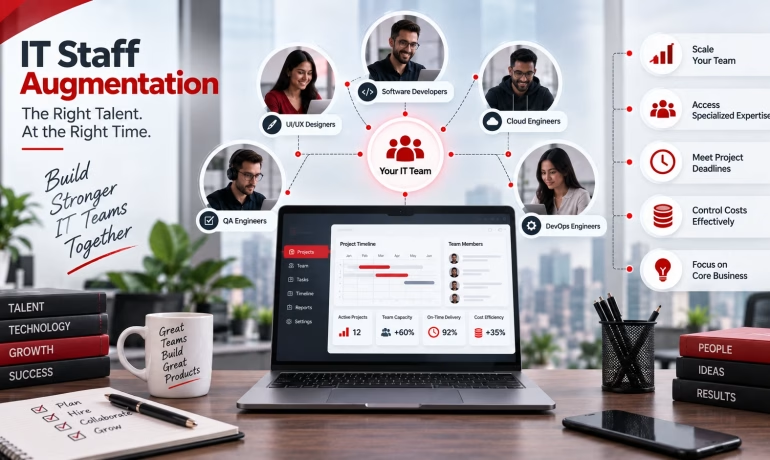
When Should Companies Consider IT Staff Augmentation?
Building a strong technology team is not always about
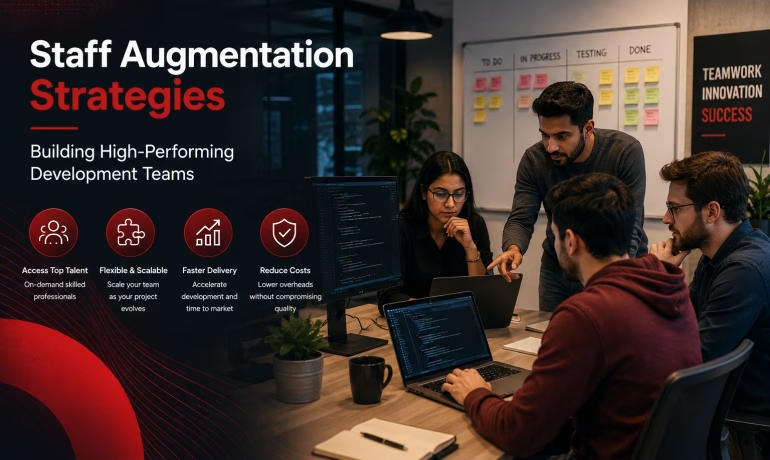
Staff Augmentation Strategies for Building High-Performing Development Teams
Finding good developers has never been the hardest part.