

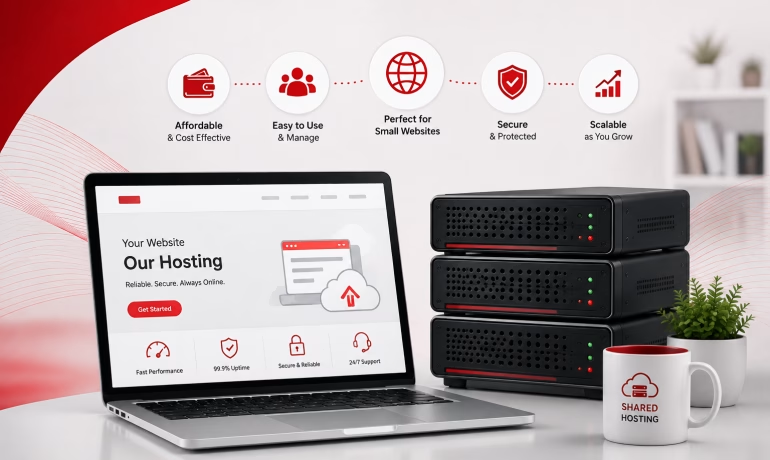
Shared hosting for small business website with affordable and reliable web hosting

Most businesses don’t start with large infrastructure. They start with an idea. A website is launched.

A few pages are added. Products or services are listed. The goal is simple. Get online. Be visible.

Start attracting customers. At that stage, businesses are usually not thinking about processors, memory allocation, or server architecture.

They’re focused on growth. That’s why many businesses choose Shared Hosting services.

Not because it’s the most powerful option available. Because it’s often the most practical one.

Most websites don’t need enterprise infrastructure on day one

One of the biggest mistakes new website owners make is assuming they need expensive hosting immediately.

In reality, most small business websites have fairly simple requirements. A company profile. A service website. A blog.

A small e-commerce store. These websites often perform perfectly well on shared hosting.

Paying for infrastructure that isn’t being used rarely makes business sense.

If you’re launching your very first website, understanding why Beginners Prefer Shared Web Hosting Services for First Websites can help you choose hosting that matches your current needs instead of paying for resources you may never use.

Small business owner managing a website using shared web hosting services

Getting online quickly matters

Small businesses usually have limited time and resources. The objective isn’t to spend weeks configuring servers.

The objective is to launch. Shared hosting simplifies that process.

The environment is already configured. Management tools are available.

Most technical requirements are handled by the hosting provider.

This allows businesses to focus on the website itself rather than the infrastructure behind it.

Lower costs create flexibility

Every business manages a budget. Especially in the early stages.

Marketing needs investment. Operations need investment.

Sales activities need investment. Infrastructure is important, but it shouldn’t consume resources unnecessarily.

That’s one reason Shared Hosting remains popular. It allows businesses to establish an online presence without making a large financial commitment.

Maintenance becomes easier

Many small business owners are not technical administrators.

Nor should they need to be. Managing operating systems. Applying server updates. Monitoring infrastructure.

These responsibilities can quickly become overwhelming. Shared hosting environments simplify much of this process.

The hosting provider handles most of the server-level maintenance. Businesses focus on running the website.

Website traffic often grows gradually

Most websites don’t receive thousands of visitors overnight.

Traffic typically increases over time. A few visitors become dozens. Dozens become hundreds. Growth is usually gradual.

Shared hosting works well during these early stages because it provides enough resources for typical business requirements while keeping costs manageable.

As traffic grows, you can better evaluate whether Shared Web Hosting Is the Right Choice for Small and Medium Websites or whether it’s time to move toward VPS or dedicated hosting.

Simplicity is often underestimated

Businesses sometimes assume that more complex solutions are automatically better.

Not always. Complexity creates management overhead.

Additional responsibilities. Additional decisions.

Shared hosting removes much of that complexity. Everything feels easier to manage.

And for many businesses, that’s a significant advantage.

Small businesses need reliability more than raw power

A common misconception is that every website needs maximum performance. What most businesses actually need is consistency.

Pages should load properly. Emails should work. Visitors should access the website without issues.

Reliable hosting often matters more than excessive resources. Especially during the early growth phase.

Security still matters

Some website owners assume security is only a concern for large organizations. That’s not true.

Every website collects information. Contact forms. Customer inquiries. Business communications.

A properly managed shared hosting environment includes security measures designed to protect these activities. Security should never be treated as optional, regardless of website size.

Businesses eventually outgrow shared hosting

And that’s perfectly normal. Growth changes requirements.

Traffic increases. Applications become larger. Resource demands become higher.

At some point, businesses may move to VPS or dedicated infrastructure. That doesn’t mean shared hosting was the wrong choice.

It means the business evolved. Shared hosting often serves as the first stage of that journey.

To understand the capabilities, limitations, and ideal use cases, read this Guide to Shared Web Hosting Services: Features before deciding whether it’s the right solution for your business.

Where Chromeis Fits

Chromeis helps businesses choose hosting solutions based on actual requirements rather than assumptions.

For small business websites, shared hosting often provides the right balance of affordability, reliability, and simplicity.

Chromeis helps organizations deploy, manage, and optimize Shared Hosting services that support growth while avoiding unnecessary infrastructure costs.

The focus remains on creating a stable online presence that can evolve as business requirements change.

Final Thought

Not every website needs powerful servers or enterprise infrastructure. Most businesses simply need a reliable place to start.

Shared hosting continues to be one of the most practical options for small business websites because it keeps costs manageable, simplifies administration, and provides the resources needed for early-stage growth.

Sometimes the best hosting solution isn’t the biggest one.

It’s the one that matches where the business is today while supporting where it wants to go tomorrow.

FAQs

1. Is shared hosting suitable for small business websites?

Yes. Shared hosting is an excellent choice for small business websites, portfolios, blogs, service-based businesses, and small online stores. It provides the resources needed for most early-stage websites at an affordable cost.

2. When should I upgrade from shared hosting?

You should consider upgrading when your website experiences consistently high traffic, requires more server resources, runs complex applications, or needs greater customization and control.

3. Is shared hosting secure for business websites?

Yes. A reputable hosting provider includes essential security features such as server monitoring, malware protection, firewalls, regular updates, and backups to help protect business websites.

4. Will shared hosting affect my website’s performance?

For most small and medium-sized websites, shared hosting delivers reliable performance. As long as your website’s traffic and resource usage remain within normal limits, visitors are unlikely to notice any issues.

5. Why is shared hosting a cost-effective option?

Shared hosting reduces costs by allowing multiple websites to share the same server resources. This makes professional web hosting affordable while still providing the reliability and features that most small businesses need.

Similar Post

Data scientists using GPU hosting for AI development and advanced computing
June 23, 2026

GPU Servers for Machine Learning and AI Applications

Most businesses don’t start looking for GPU servers. They

Managed WordPress hosting dashboard showing website performance monitoring, security management, backups, and automated updates for business websites.
June 22, 2026

Benefits of Managed WordPress Hosting for Business Websites

Most business websites start the same way. A domain