
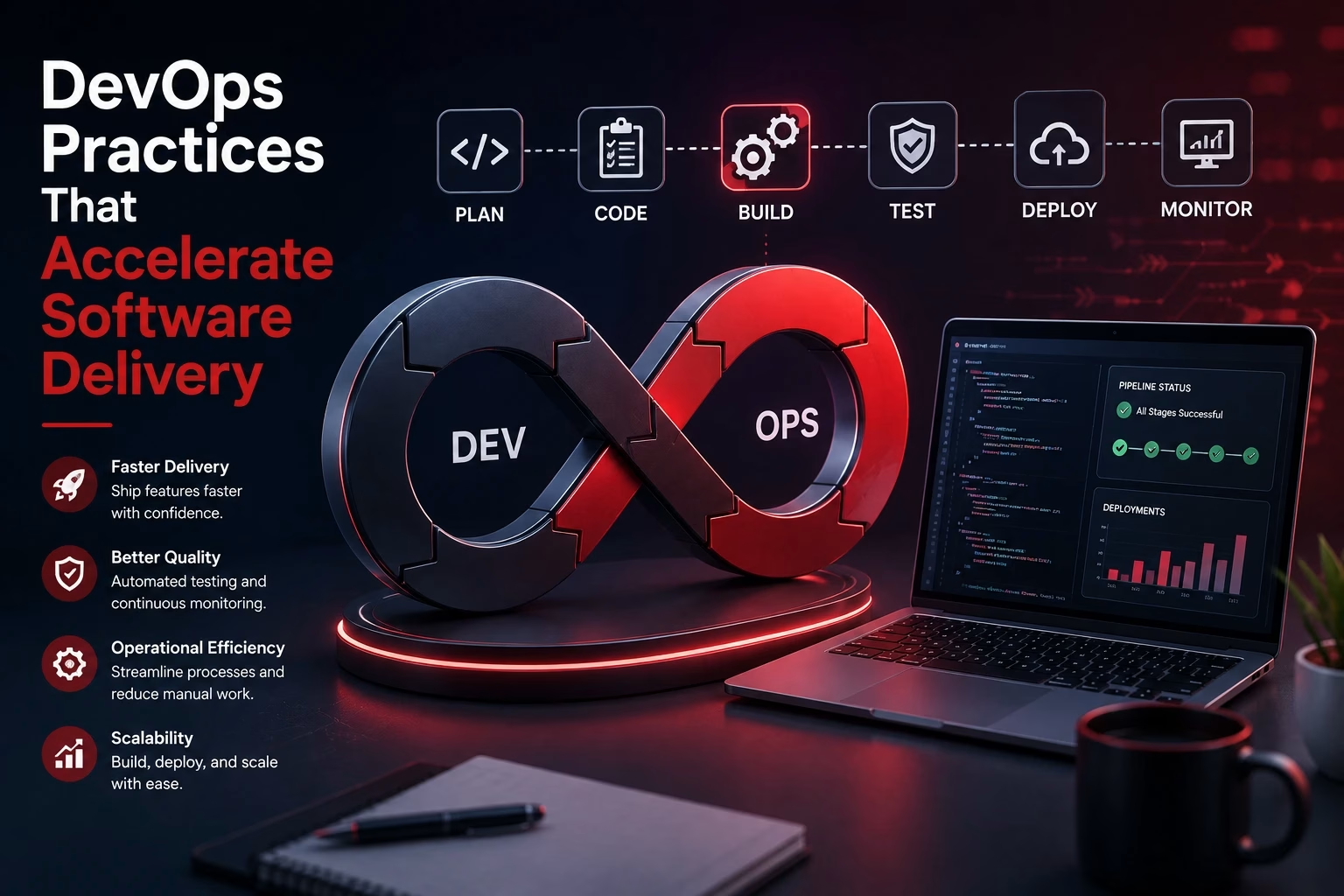
Software development has changed. Years ago, businesses planned one or two major releases every year. Teams had months to prepare. Customers were comfortable waiting.
That approach doesn’t work anymore.
Businesses update websites regularly. Mobile apps receive frequent improvements. Cloud platforms evolve every week. Customers expect problems to be fixed quickly and new features to appear without long delays.
The challenge isn’t writing software fast enough. The challenge is delivering it safely.
That’s why businesses are investing in modern DevOps services in Pakistan. Not because they want to release more software, but because they want every release to feel predictable.
Frequent Releases Reduce Risk
Large software updates sound efficient.
In practice, they often create more problems.
Hundreds of changes are deployed at the same time. If something goes wrong, finding the exact cause becomes difficult.
Smaller releases work differently.
Teams introduce fewer changes at once. Issues become easier to identify. Recovery becomes faster if something unexpected happens.
Instead of waiting months, improvements reach customers gradually.
Automation Removes Repetitive Work
Software delivery involves many repetitive tasks.
Running tests.
Deploying code.
Creating backups.
Checking configurations.
Doing these activities manually every time increases the chance of mistakes.
Automation helps teams perform the same tasks consistently. People still monitor the process. The routine work simply becomes more reliable.
That’s one reason DevOps automation has become an important part of modern software development. Automation, continuous integration, and deployment workflows are also central to DevOps best practices for faster deployment.
Testing Shouldn’t Wait Until the End
Many businesses once treated testing as the final stage before launch.
Development happened first.
Testing happened later.
Modern DevOps works differently.
Testing becomes part of the entire process. Every change is checked before moving forward.
Small issues are identified early instead of becoming larger problems after deployment.
This approach saves time because fixing an early mistake is usually much easier than correcting one discovered in production.
Development and Operations Work Toward the Same Goal

Developers want to build software.
Operations teams want systems to remain stable.
These objectives sometimes appear to conflict.
DevOps helps bring both teams together. Instead of working separately, they collaborate throughout the project.
Developers understand operational requirements. Operations teams understand development priorities.
The result is smoother software delivery and fewer surprises during deployment.
This collaboration is one of the core reasons DevOps is important for modern businesses.
Monitoring Continues After Deployment
Launching software isn’t the finish line.
It’s the beginning of another stage.
Applications need monitoring. Performance needs reviewing. Unexpected behaviour needs attention.
Good DevOps practices include continuous observation after every release.
This allows teams to respond quickly before customers begin reporting issues.
Consistent Environments Reduce Deployment Problems
One common challenge in software development is inconsistency.
The application works perfectly during development.
It behaves differently after deployment.
Often the software isn’t the problem. The environments are.
DevOps focuses on creating consistent development, testing, and production environments so software behaves the same throughout the delivery process.
Faster Delivery Improves Customer Experience
Customers rarely ask how software is deployed.
They notice something else.
New features arrive more often.
Problems are fixed more quickly.
Applications remain available during updates.
These improvements create confidence without customers needing to understand the technology behind them.
Reliable delivery becomes part of the product experience.
DevOps Supports Long-Term Growth
As businesses expand, software projects become larger.
Development teams grow. Applications become more complex.
Without structured delivery processes, complexity grows alongside them.
DevOps creates repeatable workflows that continue working whether a company has five developers or fifty.
That’s one reason many organizations choose an experienced DevOps software company when modernizing their software delivery process.
Good Delivery Processes Create Confident Teams
Nobody enjoys worrying about deployments.
Developers want confidence.
Project managers want predictable schedules.
Business leaders want stable systems.
DevOps doesn’t remove every challenge, but it helps reduce uncertainty by creating processes that teams can trust.
That confidence often becomes just as valuable as the technology itself.
Where Chromeis Fits
Chromeis helps businesses improve software delivery by implementing practical DevOps practices that simplify development, testing, deployment, and ongoing system management.
Through automation, continuous integration, deployment optimization, infrastructure management, and performance monitoring, Chromeis helps organizations release software more efficiently while maintaining reliability and stability.
The focus remains on creating delivery processes that support long-term business growth instead of temporary improvements.
Final Thought
Software delivery shouldn’t feel stressful every time an update is released.
The strongest development teams don’t succeed because they work longer hours.
They succeed because they follow consistent processes that reduce mistakes and improve collaboration.
DevOps helps create those processes, allowing businesses to deliver better software faster without sacrificing quality or customer confidence.
Frequently Asked Questions
1. What are DevOps practices?
DevOps practices are processes that bring software development and IT operations together to improve collaboration, automation, testing, deployment, monitoring, and overall software delivery.
2. How does DevOps accelerate software delivery?
DevOps accelerates delivery by automating repetitive tasks, integrating testing earlier, creating consistent environments, and using smaller, more frequent releases. This helps teams identify and resolve issues faster.
3. Why is automation important in DevOps?
Automation reduces repetitive manual work and helps teams perform testing, deployment, configuration, and other delivery tasks consistently. This can reduce human error and make releases more predictable.
4. Does DevOps only focus on faster deployments?
No. DevOps focuses on making software delivery both faster and more reliable. Monitoring, testing, collaboration, infrastructure management, and recovery are equally important parts of the process.
5. Can DevOps help growing businesses?
Yes. DevOps creates repeatable delivery processes that can support growing development teams, increasingly complex applications, and a higher frequency of software releases without relying entirely on manual processes.
Similar Post

What Is DevOps and Why Does Your Business Need It?
Software doesn’t usually fail because developers write bad code.

DevOps Best Practices for Faster Deployment and Automation
Most software projects don’t get delayed because developers stop