
Growth creates opportunities. It also creates extra work.
A company that once managed everything with spreadsheets suddenly has five different systems.
Sales uses one platform. Finance uses another. Customer support has its own software.
Operations track information somewhere else. Every department continues doing its job.
The problem is that they stop working together.
People begin asking the same questions repeatedly. Reports take longer to prepare. Employees spend time searching for information instead of using it.
This is usually the point where businesses begin exploring enterprise IT solutions. Not because they want more software.
Because they want their existing processes to make more sense.
Every Department Collects Valuable Information
A customer places an order.
The sales team records it.
Finance creates an invoice.
Operations prepare delivery.
Support answers future questions.
The same customer appears in several different systems.
When those systems don’t communicate, people end up entering the same information multiple times.
That repetition wastes time and increases the chance of mistakes.
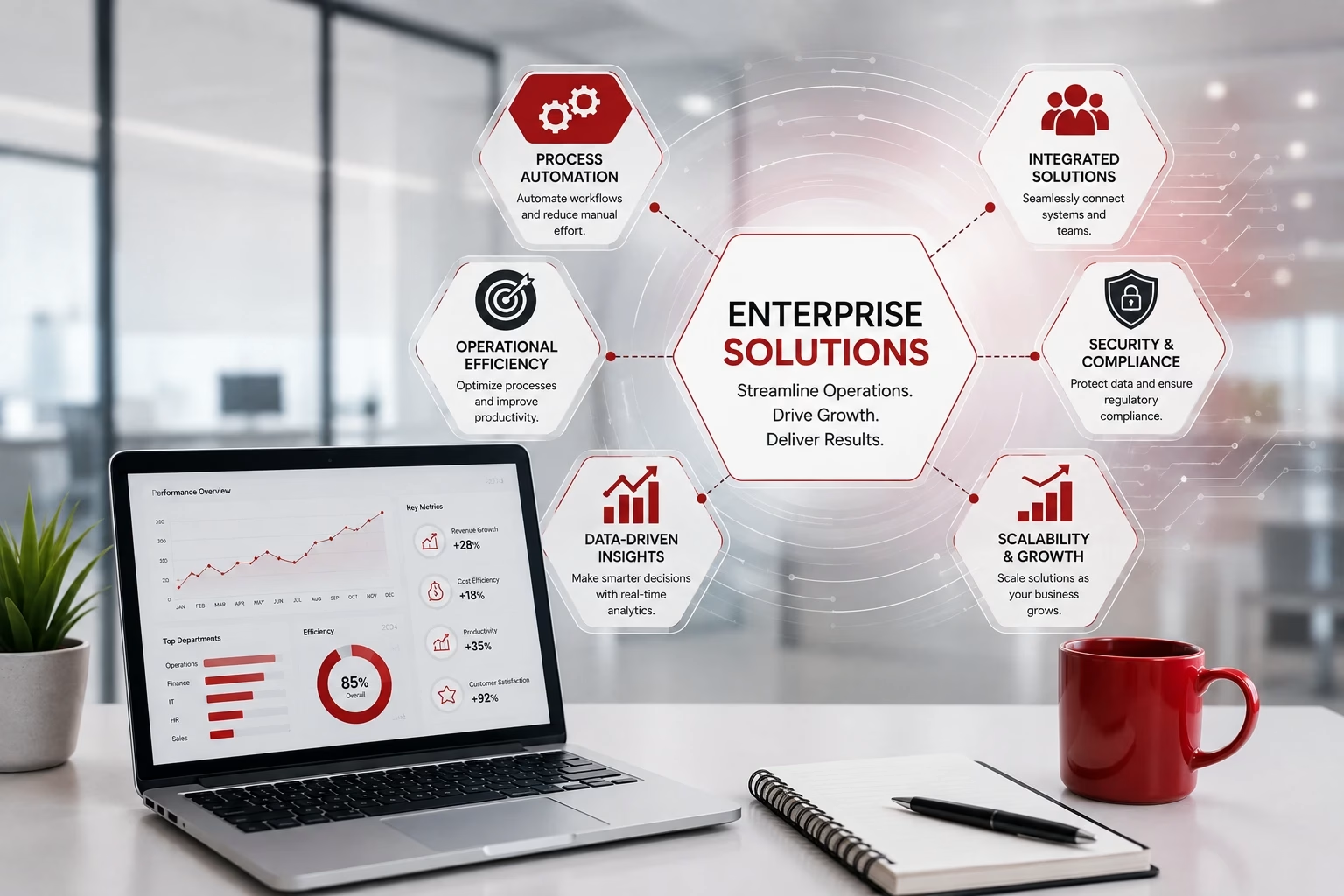
Enterprise solutions connect these processes so information moves naturally across departments. Businesses looking to understand how these systems work can explore our enterprise solutions for a broader overview of how connected technology can support organizational operations.
Manual Work Slows Businesses Quietly
Nobody notices a five-minute delay.
Or a report that takes an extra hour.
Or a manager waiting until tomorrow for approval.
These delays feel small on their own.
Together, they become part of the working day.
Employees adapt without realizing how much time is disappearing.
Streamlined systems remove these unnecessary steps and allow work to move more efficiently from one department to another.
Better Visibility Leads to Better Decisions

Business leaders don’t struggle because information doesn’t exist.
They struggle because it’s scattered.
Sales figures come from one report.
Inventory comes from another.
Financial data is stored elsewhere.
Before a decision is made, someone has to collect everything first.
An integrated enterprise solution gives decision-makers access to information without waiting for multiple departments to prepare it.
That doesn’t replace experience.
It simply makes good information easier to access.
For a deeper look at the operational benefits, our guide on how enterprise solutions improve business operations explains how connected systems can help businesses reduce inefficiencies and improve workflows.
Employees Spend Less Time Repeating the Same Work
Imagine updating customer information.
Without connected systems, the same details might need to be entered several times.
Once in CRM.
Again in accounting.
Again in support software.
The work is repetitive.
It also creates opportunities for inconsistencies.
Enterprise solutions reduce duplication by allowing information to move automatically between connected systems.
Employees focus more on customers and less on administration.
Business Processes Become Easier to Manage
Every organization has routines.
Purchase approvals.
Leave requests.
Inventory updates.
Customer onboarding.
Many of these activities still depend on emails or manual follow-ups.
As businesses grow, keeping track of every step becomes difficult.
Enterprise systems help organize these workflows so responsibilities remain clear and progress becomes easier to monitor.
Growth No Longer Creates Unnecessary Complexity
Adding more customers shouldn’t automatically create confusion.
Neither should hiring more employees.
The right systems grow alongside the business.
Departments remain connected.
Information stays organized.
Processes continue working even as operations become larger.
That’s one reason businesses invest in enterprise solutions before operational complexity begins affecting customer experience.
Understanding why businesses need enterprise solutions can help organizations identify when disconnected processes and growing operational demands justify a more integrated technology environment.
Every Business Needs a Different Solution
No two organizations operate exactly the same way.
A healthcare provider manages different processes than a manufacturing company.
A logistics business has different priorities than a software company.
The technology should reflect those differences.
Good enterprise systems support the way a business already works instead of forcing every organization into the same structure.
Technology Should Remove Work, Not Create It
Employees shouldn’t need extra effort just to use business software.
The best enterprise platforms usually feel simple.
Information is easy to locate.
Tasks are easy to complete.
Departments collaborate naturally.
When people stop talking about the system and simply get their work done, the technology is doing its job.
Where Chromeis Fits
Chromeis helps businesses implement enterprise IT solutions that connect departments, simplify workflows, and improve operational efficiency without disrupting existing business processes.
By understanding how each organization operates, Chromeis designs enterprise solutions that improve collaboration, automate repetitive tasks, and provide better visibility across the business.
The objective is to create systems that support sustainable growth while making everyday operations easier for everyone involved.
Final Thought
Businesses rarely become inefficient overnight.
Small delays gradually become normal.
Repeated tasks quietly consume valuable time.
Disconnected systems create unnecessary complexity.
Enterprise solutions help bring everything back together by connecting people, processes, and information into one organized environment.
When operations become simpler, businesses spend less time managing internal challenges and more time focusing on customers, innovation, and long-term growth.
Frequently Asked Questions
1. What are enterprise solutions?
Enterprise solutions are technology systems designed to help organizations manage and connect business processes, information, and departments more efficiently.
2. How do enterprise solutions improve business operations?
They can reduce repetitive manual work, connect information across departments, organize workflows, and give decision-makers better visibility into business operations.
3. When does a business need enterprise solutions?
Businesses may consider enterprise solutions when disconnected systems, repetitive tasks, manual workflows, or growing operational complexity begin affecting productivity and customer experience.
4. Can enterprise solutions be customized for different businesses?
Yes. Different industries and organizations have different processes and priorities, so enterprise solutions can be designed around the way a particular business operates.
5. Do enterprise solutions replace existing business systems?
Not necessarily. Enterprise solutions can connect or improve existing systems and workflows rather than requiring a business to replace everything at once. The appropriate approach depends on the organization’s existing infrastructure and operational requirements.
Similar Post

The Role of Enterprise Solutions in Connecting Business Departments and Centralizing Data
Modern businesses generate information from every department. Sales teams

Key Components of Effective Enterprise Technology Solutions
Modern organizations rely on technology for almost every part