

Most people don’t notice an SSL certificate. Until it isn’t there. A visitor opens a website.
Instead of seeing the homepage, they see a browser warning. “This connection is not private.”
Many people don’t continue after that. They close the page. Search for another website. Move on.
It doesn’t matter how good the products are or how attractive the design looks. Trust disappears before the website even loads.
That’s why SSL Certificates have become one of the first things every business should install after launching a website.
Every website exchanges information
Not every visitor fills out a form. Not everyone makes a purchase. But every website exchanges data.
Someone visits a page. Logs into an account. Submits a contact form. Enters payment details. Signs up for a newsletter.
That information travels between the visitor and the website.
Without encryption, that communication becomes easier to intercept.
An SSL certificate protects that connection by encrypting the data while it’s being transferred.
Trust begins in the browser
People make decisions quickly online. If a browser displays a warning message, most visitors won’t spend time investigating the reason. They simply leave.
It’s human nature. People avoid websites that appear unsafe.
A secure connection doesn’t guarantee the business is trustworthy. But an insecure connection immediately creates doubt.

Search engines also value secure websites
Website security isn’t only about visitors. Search engines also encourage secure browsing.
Over the years, HTTPS has become the expected standard for modern websites.
While an SSL certificate alone won’t improve search rankings dramatically, it supports a healthier website and contributes to a better overall user experience.
For businesses investing in SEO, it’s one of the easiest improvements to make.
Online payments depend on secure connections
Imagine entering your card details on a website that displays a security warning. Very few people would continue.
Whether it’s an online store, a booking system, or a customer portal, secure connections are essential whenever personal or financial information is involved.
Customers need confidence before sharing sensitive information.
SSL certificates help create that confidence.
It’s not only for large businesses
Some small business owners believe SSL certificates are only necessary for banks or e-commerce websites. That’s no longer true.
Every business website benefits from a secure connection. Even a simple contact form collects personal information.
Names. Phone numbers. Email addresses. Protecting that information is part of building customer trust.
If you’re launching a new website, choosing Web Hosting – Unlimited Bandwidth & Free SSL provides both secure hosting and SSL protection from day one.
SSL is one layer, not the entire solution
Installing an SSL certificate is an important step. It isn’t the only step.
A secure website also needs:
- Regular software updates
- Reliable hosting
- Strong passwords
- Routine backups
- Continuous monitoring
SSL protects information while it travels. Other security measures protect the website itself. The strongest websites combine all of these practices.
Visitors rarely notice security until it’s missing
A working SSL certificate doesn’t attract attention. Visitors simply browse the website. Everything feels normal. That’s actually the goal.
Security should work quietly in the background without interrupting the experience.
When people never think about website security while browsing, it usually means it’s doing its job.
Renewing SSL certificates matters too
Installing an SSL certificate once isn’t enough. Certificates expire. If they’re not renewed on time, browsers begin displaying warnings again.
Businesses sometimes forget this because everything works perfectly for months.
Regular monitoring helps ensure secure connections continue without interruption.
Where Chromeis Fits
Chromeis helps businesses secure their websites with properly configured SSL Certificates that protect customer data and improve trust without adding unnecessary complexity.
From certificate installation and configuration to renewals and ongoing website security support, Chromeis helps organizations maintain secure HTTPS connections that support better customer confidence and a safer online experience.
Final Thought
An SSL certificate is one of the simplest improvements a business can make to its website. Visitors expect secure browsing. Browsers expect secure connections. Search engines encourage secure websites.
Installing SSL isn’t just a technical requirement anymore. It’s part of showing customers that their information deserves to be protected every time they visit your website.
FAQs
1. What is an SSL certificate and why is it important?
An SSL certificate encrypts the connection between a visitor’s browser and your website, protecting sensitive information such as login credentials, contact details, and payment data while improving visitor trust.
2. Does an SSL certificate improve SEO?
An SSL certificate supports SEO by enabling HTTPS, which search engines consider a positive ranking signal. It also improves user trust and contributes to a better browsing experience.
3. Do small business websites need an SSL certificate?
Yes. Every business website should use SSL, even if it only collects contact form submissions. Encrypting customer information helps build trust and protects personal data.
4. What happens if an SSL certificate expires?
When an SSL certificate expires, browsers display security warnings, which can discourage visitors from accessing your website and reduce customer confidence until the certificate is renewed.
5. Is an SSL certificate enough to secure my website?
No. An SSL certificate protects data in transit, but complete website security also requires secure hosting, software updates, strong passwords, backups, firewalls, and regular monitoring.
Similar Post
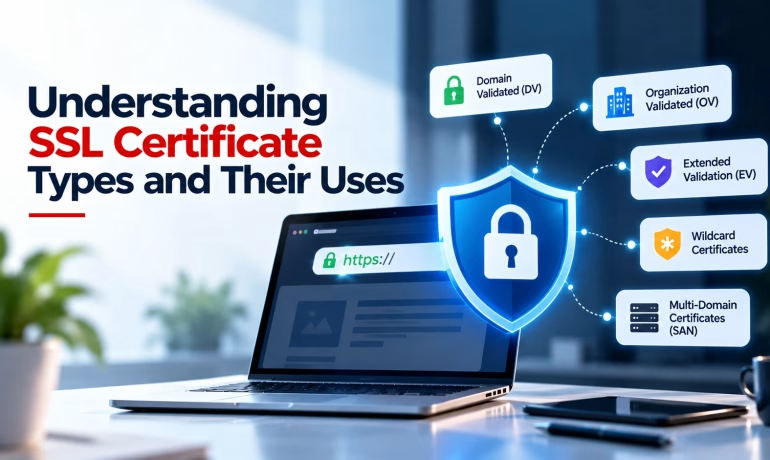
Understanding SSL Certificate Types and Their Uses
Website security has become an essential part of building
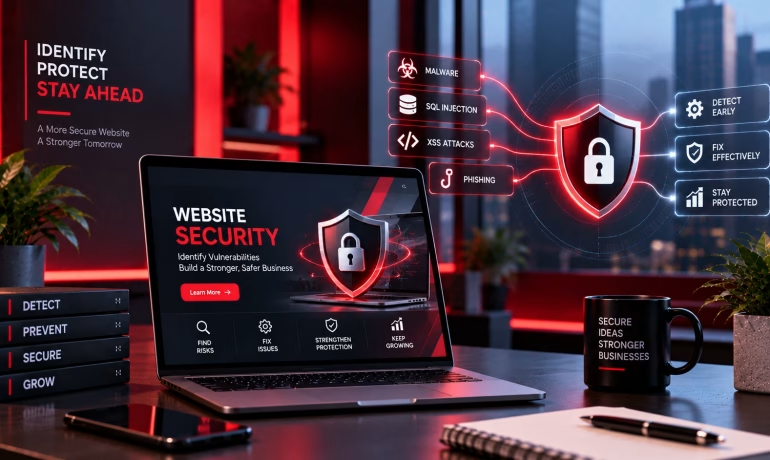
Common Website Security Vulnerabilities and How to Address Them
A website is more than a digital presence. For