

Most digital businesses in Pakistan don’t realize they have a design problem. They think they have a marketing problem. Or a traffic problem. Or a sales problem. But if you look closely, the issue often sits right in front of users in how the product behaves, not how it looks. People visit the site. They open the app. They try a feature. And then they leave. No complaints. No feedback. Just silence. That’s usually a UI/UX problem and it’s exactly why working with the Best UI UX agency in Pakistan becomes critical as businesses start scaling.
Design problems rarely announce themselves
Bad UI/UX doesn’t crash systems. It doesn’t throw errors. It doesn’t send alerts. It quietly increases friction. Users hesitate. They get confused. They feel unsure. And instead of fighting through it, they move on. Growing businesses often miss this because everything technically works. Pages load. Buttons respond. Forms submit. But usability isn’t about whether something works it’s about how easy it feels to use. Many companies only recognize this when they face a full-blown UX Crisis: Abandon Websites That ‘Look Fine’ on Paper but fail in real-world usage.
Early growth hides design issues
In the early stages, design flaws are easy to ignore. Early users are patient. Teams are small. Feedback comes directly. Workarounds feel acceptable. But growth changes everything. As more users arrive, patience drops. Expectations rise. Users don’t compare your product to what you built last year. They compare it to the best digital experiences they already use banking apps, global SaaS tools, and polished platforms built with strong UX foundations. When that gap shows, no amount of marketing or even solid web development services can compensate for a frustrating experience.
The UI is visible. UX is felt.
Many teams still mix these two up. UI is what users see. UX is what users experience. You can redesign screens endlessly and still keep the same UX problems underneath. Cleaner colors won’t fix confusing flows. Better typography won’t fix unclear decisions. UX is about reducing effort. About making the next step obvious. About removing moments where users stop and think, “What do I do now?” That’s where real design work happens and where experienced UX teams add the most value.

Growing products become complex fast
As businesses grow, products grow with them. New features are added. New pages appear. New users arrive with different needs. Without strong UX thinking, complexity leaks into the interface. Navigation gets crowded. Flows become longer. At some point, users aren’t struggling because the product is powerful they’re struggling because it’s unclear. Good UX doesn’t remove features. It organizes them so users can actually benefit from what you’ve built.
Why this matters more in Pakistan
Digital adoption in Pakistan is accelerating fast. Businesses are launching platforms, portals, apps, and dashboards under pressure. Speed matters. Delivery matters. But usability often gets pushed aside. The result is products that function, but don’t feel intuitive. Users rely heavily on support. Teams spend time explaining things that should explain themselves. As competition grows, this becomes expensive. Users don’t compare your product only with local alternatives they compare it with the best global experiences they already trust.
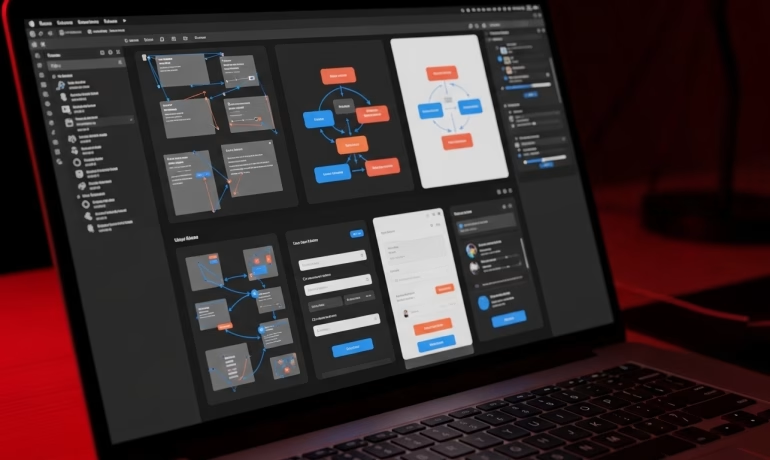
Tools like Figma don’t fix thinking
Modern design tools have made execution easier. Teams can collaborate faster. Screens can be shared. Changes happen quickly. But tools don’t replace understanding. Without proper UX thinking, design becomes reactive. Screens are adjusted after complaints instead of being designed around real user behavior. Good UI/UX starts before tools are opened. It starts with understanding how users think, not how the interface should look.
UX saves more than it costs
Many businesses see design as an expense. In reality, poor UX is far more expensive. It increases:
- support requests
- onboarding time
- feature abandonment
- internal confusion
Good UX reduces friction everywhere. It saves time for users and teams alike. That value compounds quietly as the business grows especially when UX decisions are aligned with long-term business goals.
Trust is shaped through design
Users decide whether to trust a digital product very quickly. If something feels confusing, inconsistent, or unpredictable, doubt creeps in. Even if the service itself is solid, the experience feels uncertain. Good UI/UX doesn’t just guide users. It reassures them. Clear structure communicates confidence. Confusion communicates risk.
Design is not about trends
Trends come and go. Animations, effects, visual styles they change constantly. Good UX stays boring in the best way. Clear navigation. Predictable behavior. Obvious actions. Helpful feedback. When users don’t have to think about the interface, design has done its job.
Where ChromeIS fits
ChromeIS approaches UI/UX design as a problem-solving discipline, not surface polish. The focus is on:
- understanding how users actually behave
- simplifying flows instead of adding visuals
- aligning design decisions with business goals
- working closely with development teams
The goal isn’t to make products look impressive. It’s to make them easier to use as they grow which is why businesses looking for the Best UI UX agency in Pakistan often prioritize UX thinking over visual trends.
Final thought
As digital businesses grow, complexity is unavoidable. UI/UX design is what keeps that complexity from reaching users. When design works, users don’t notice it. They just move forward without friction. And for growing businesses in Pakistan, that smooth experience is often the difference between being tried once and being trusted long-term.
Similar Post
Increase User Retention with Strategic UI UX Design Services
Most businesses focus heavily on attracting users. Marketing campaigns

Choosing the Right UI UX Designers for Your Website or Mobile App
Most people think they need UI UX designers because