

SaaS MVP development starts with one paying customer’s recurring task. Build the smallest version of your software as a service (SaaS) that lets that customer finish the task, then watch whether they come back when the work is due again.
Say a print shop needs clients to approve proofs. Its first useful product could be a page where a client opens the right proof, marks it approved and gives the shop a record it can trust. The shop can send the link by hand. But if a client can approve an old proof by mistake, the product has missed its purpose. That distinction is how you draw the line around a minimum viable product (MVP).
Set the scope for SaaS MVP development
Start with the last time the work happened. Ask your buyer to show you the file, message or form that set it in motion. Who picked it up next? What did that person need before they could act? Where did the result go? A walk through a real job gives you a much better brief than a list of features someone might like.
Write one sentence with a user, a trigger and a result. For the print shop, it might read, “When a designer sends a revised proof, the buyer can approve that version and the press operator can see which file to print.” You can test each part. “A client portal with better collaboration” leaves the team guessing what counts as done.
Put each request on one side of the launch line
| Request from the print shop | Pilot decision | Reason |
|---|---|---|
| Approval tied to a file version | Build now | The press operator must know which file to print. |
| A reminder after two days | Send by hand | A staff member can check pending proofs during the pilot. |
| Client logo on each page | Defer | Ask again if a buyer refuses to use an unbranded link. |
| Private access for each account | Test before inviting clients | One shop must never see another shop’s proofs. |
Use the same test for custom MVP development. A feature earns its place when leaving it out breaks the result, puts customer data at risk or prevents you from learning why people return. Keep a short list of the work a human will do and give each task an owner. Chromeis covers earlier discovery decisions in its SaaS planning guide.
Design a pilot that can change your mind
Decide in advance what would make you stop spending. A user who signs in during a demo may just be polite. A shop that invites its own client the next time a proof is due has taken a much more telling step. Choose an event that matches the buyer’s work cycle. A weekly target makes little sense for a job that happens at month end. From a pilot invitation to a funding decision
- Invite. Record which accounts have real work due during the test.
- Observe. Mark the first job completed and any help it took.
- Wait for the next job. Count eligible accounts that repeat the task on their own.
- Ask for the sale. Show the buyer the price and terms you intend to offer.
- Decide. Keep, change or stop the pilot. Write down which observation drove the decision.
Worked example 1. Six print shops try proof approval
In this hypothetical pilot, six shops agree to try the tool. One has no second job during the test. Five shops have another proof due, and three send it without a reminder. The repeat-use rate among eligible shops is 3 ÷ 5 = 60%. Keep the sixth shop in your notes so the team can follow up when its next job arrives.
Now suppose only one of the three returning shops agrees to pay. Call the other two. One may need the owner to sign off. The other may be happy to go back to email. Those answers call for different changes. With five eligible shops, a single account changes the rate by 20 percentage points. Keep the counts beside the percentage when you report the result.
This is where MVP development for SaaS startups can go wrong even when the app works. If a founder chased every approval, the pilot also tested the founder’s labour. Record who sent each reminder. Chromeis idea-to-launch guide explains where customer feedback fits into the wider product cycle.
Choose a SaaS MVP tech stack your team can run
The tech stack is the set of tools used to build and run the app. For a small web pilot, start with a framework your team knows, a database for business records and a place to store uploaded files. Ask the person who will support the product to show how they would release a fix, read an error log and restore a lost record.
If you are looking for the best tech stack for MVP work, bring one difficult job to the discussion. For the print shop, that job is replacing a large proof while preserving the earlier approval record. Ask the team to demonstrate it with a file the size clients actually send. A polished demo with a tiny sample tells you little about that risk.
Decide where customer accounts and payments meet
A tenant is a customer account, such as one print shop. Two shops can share an application while each sees only its own records. Include files, emailed links and exports in that rule. Use the AWS SaaS Lens for architecture guidance and the Chromeis multi-tenant architecture guide when discussing how to share infrastructure.
You can invoice a small pilot by hand if the buyer agrees. If customers subscribe in the app, decide how access changes after payment, cancellation or a failed renewal. Stripe sends software notifications called webhooks for changes to subscriptions. Its subscription webhook guide explains which events your app can receive. Put a failed renewal through the test environment before you rely on that flow.
Before you fund the next feature, ask three people to show you three things. The user can finish a real job. The buyer knows what they would pay for. The person on support can find out what happened when a job failed.
Compare SaaS MVP development services on the same brief
Give each SaaS MVP development company the same workflow, sample input and acceptance test. Ask what it will deliver, what you must supply and which assumptions would change its quote. A fixed fee for a prototype and a fee for a live pilot cover different work, even when both proposals promise a launch.
| Delivery model | Good fit | Question to settle first |
|---|---|---|
| Custom MVP development services | Your workflow needs specific rules, such as version approval. | Which real task must pass before we accept the build? |
| MVP as a service | You want ongoing team capacity as pilot feedback arrives. | What capacity, handover and exit terms does the fee include? |
| Staff augmentation | You already have a product lead and need an extra skill. | Who will review work and take responsibility for releases? |
If you outsource MVP development, have someone on your side own the scope and accept each milestone. Ask for access to the code repository, hosting account, design files and release notes. Set a handover test where another developer follows the instructions and starts the app. The Chromeis pages on SaaS product development services and IT staff augmentation describe two ways to bring in help.
A minimum viable product development agency should be able to walk through a sample handover. When comparing MVP development services for early-stage SaaS startups, ask who answers a support call the morning after release and how that time is billed. An MVP product development service that ends at delivery may suit a team with its own engineer. A founder running the pilot alone needs a named contact and a clear support period.
A demo format for founders who do not code
For MVP development for non-technical founders, make the buyer’s task the agenda for every demo. Bring a new sample file. Share your screen and do the work yourself. If the developer has to take over, note the step and agree whether to fix it before launch. End by exporting one record and checking that it still makes sense outside the app.
Rapid MVP development works best when you shorten the path to evidence. Ask for two estimates if a third-party integration sets the schedule. One should cover a file import that a pilot customer can use now. The other should cover the live connection, including access approvals and error handling. If fresh data is essential to the purchase, a file import will test the wrong promise.
Decide when to move from MVP to SaaS at wider scale
Worked example 2. A distributor wants weekly stock alerts
Imagine a distributor that loses orders when a fast-selling item runs out. For a pilot, its buyer uploads a stock file on Monday and gets a short list of items to reorder. The founder cleans up odd product codes by hand. This is a reasonable way to test whether the buyer acts on the list. Log the cleanup time from the first upload.
Suppose eight accounts each need 15 minutes of cleanup a week. That is 8 × 15 = 120 minutes, or two hours. At 40 similar accounts it would take ten hours a week. If buyers reorder from the list and renew, a repeatable import may deserve the next development budget. If buyers ignore accurate alerts, a faster import does little for demand. Watch a buyer place an order before you commit.
Once you understand the bottleneck, match the work to the problem. Inconsistent product codes point to data quality and integration work. Trouble releasing fixes points to deployment and recovery practices. For the stages beyond the pilot, see the SaaS product development guide.
Questions founders ask before commissioning a pilot
Can a prototype count as an MVP in SaaS?
A clickable prototype can answer whether a user understands a task. If your question is whether shops will pay to approve live proofs, let them use the service on real work. An MVP for SaaS can include steps you handle by hand as long as you track them and the buyer gets the promised result.
What should an “MVP SaaS” project brief say?
A note such as “create an MVP for SaaS startup customers” leaves the buyer and the task open. Replace it with the customer’s role, the event that starts the job and the result they will pay for. Attach a sample input and the record that should exist at the end. Those two items make a brief much easier to quote.
How should I budget for MVP development for SaaS?
Use the stages in the business guide to SaaS delivery to split the budget into three parts. Price the build, the cost to run the pilot and the work after handover. Ask for an estimate against each item. Include the founder’s time on support and imports. If one quote includes the pilot month and another ends at launch, ask both teams to price the same period before you decide.
What should I send Chromeis for a first discussion?
Send one example of the work, who does it, what goes wrong today and when the next real job is due. Include the system the customer already uses and who can approve access. That gives the team a concrete basis for discussing scope, delivery and support.
Similar Post
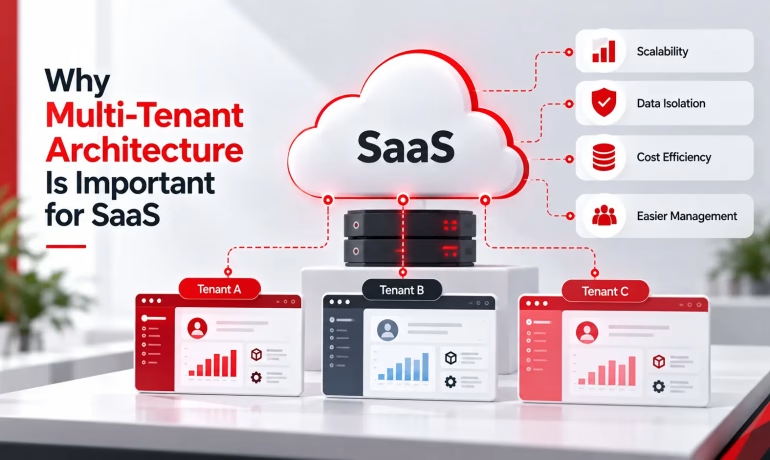
Why Multi-Tenant Architecture Matters in Scalable SaaS Product Development
Software businesses are constantly looking for ways to build

Essential Considerations Before Starting SaaS Product Development
Software has changed the way businesses operate. Companies no