
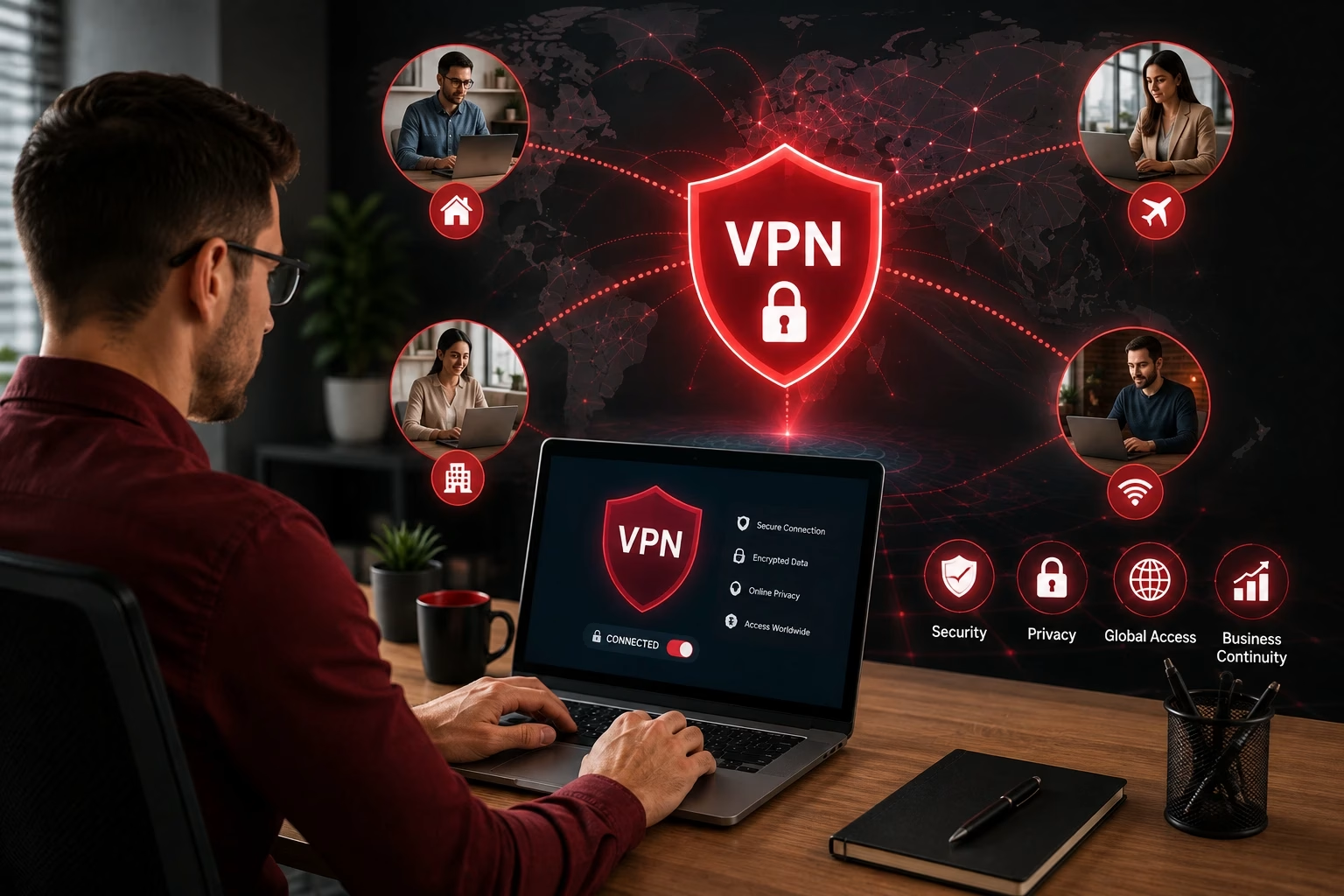
The way people work has changed. Employees no longer spend every working hour inside the office.
Some work from home. Others travel to meet clients. Support teams access business systems from different cities. Managers review reports while attending conferences.
This flexibility has improved productivity, but it has also introduced new security challenges.
Every time an employee connects to company resources from a public or home network, business data travels across the internet. Without proper protection, that information becomes more vulnerable to interception and unauthorized access.
This is why businesses increasingly rely on a Virtual Private Network in Pakistan to create secure connections between employees and company systems, regardless of where they are working.
What Is a VPN?
A Virtual Private Network, commonly known as a VPN, creates an encrypted connection between a user’s device and a secure server.
Instead of sending information openly across the internet, the data travels through a protected tunnel. Anyone attempting to intercept that information sees encrypted data rather than readable business information.
This allows employees to access company resources more securely, even when using public Wi-Fi or external internet connections.
If you’re new to VPN technology, this guide on online privacy using secure Virtual Private Network services explains how encrypted connections help safeguard personal and business data.
Remote Work Needs Stronger Protection
Working remotely offers convenience.
However, home networks and public internet connections don’t always provide the same level of security as office infrastructure.
Employees may connect from hotels, airports, coffee shops, or shared workspaces. These environments increase security risks if sensitive business information is transmitted without encryption.
Using a Virtual Private Network helps protect communication between employees and business systems, reducing exposure to cyber threats while supporting flexible work environments.
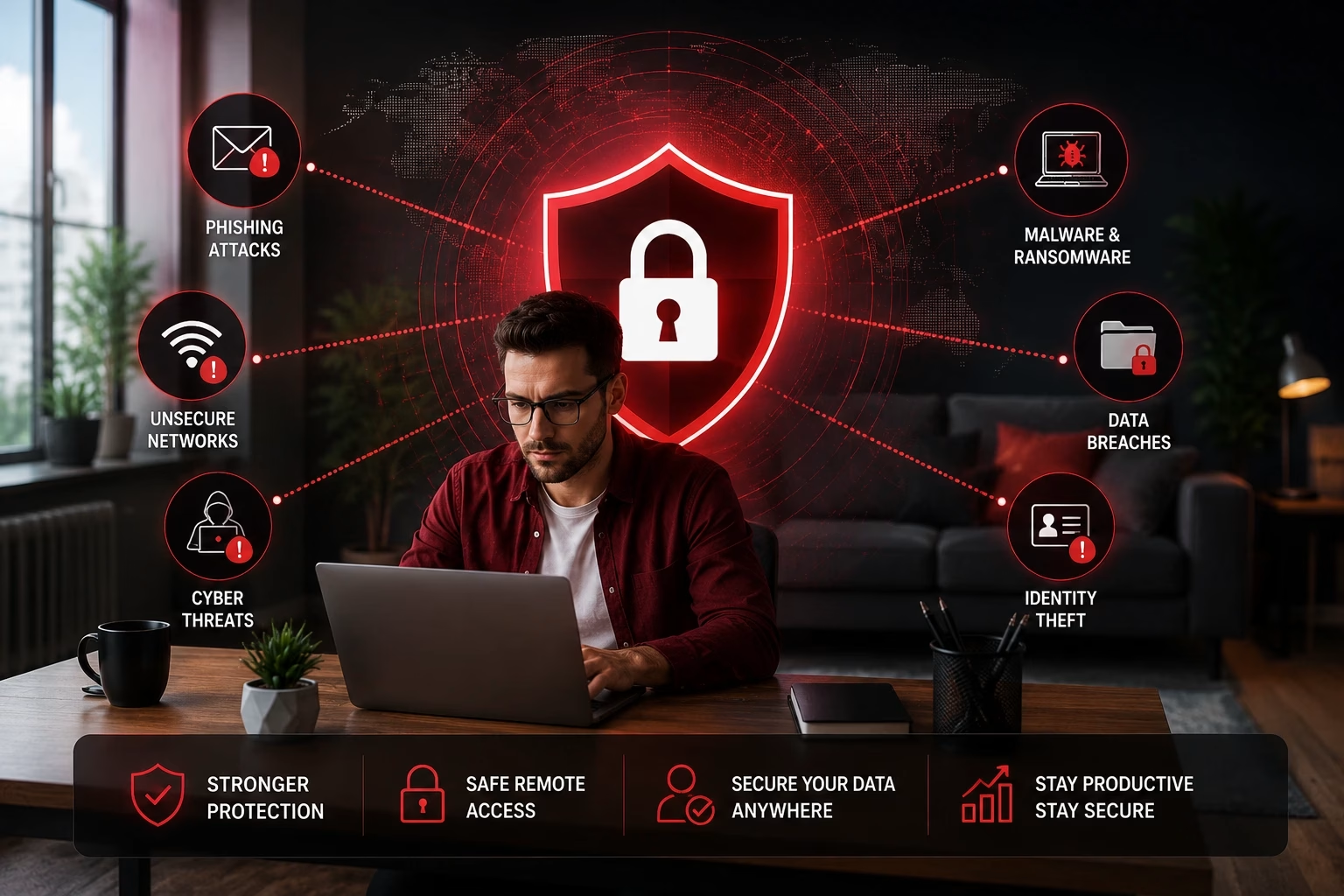
Secure Access to Internal Business Systems
Many organizations use applications that shouldn’t be publicly accessible.
- Accounting software
- ERP platforms
- Customer databases
- Internal file servers
- Human resource systems
A VPN allows authorized employees to connect securely to these internal resources without exposing them directly to the public internet.
Only verified users with proper credentials can establish secure connections.
Data Privacy Becomes Easier to Maintain
Businesses handle confidential information every day.
- Customer records
- Financial reports
- Contracts
- Business strategies
- Employee information
Protecting this data is both a security responsibility and, in many industries, a regulatory requirement.
VPN encryption helps reduce the risk of sensitive information being exposed while moving between employees and company systems.
Better Security for Distributed Teams
Modern businesses often operate across multiple locations.
- Head office
- Regional branches
- Remote employees
- Field technicians
- International teams
Instead of treating every location as a separate environment, VPN technology securely connects them into one protected business network.
This creates a consistent experience regardless of where employees are working.
Organizations implementing VPN solutions for secure remote work and business protection can simplify secure communication while maintaining strong security standards across distributed teams.
Public Wi-Fi Should Never Be Trusted Completely
Public wireless networks are convenient.
They’re also unpredictable.
Businesses cannot control who else is connected or how the network is configured.
Employees checking emails or accessing company systems over unsecured public Wi-Fi may unintentionally expose valuable information.
VPN encryption helps reduce this risk by protecting business traffic before it leaves the employee’s device.
VPN Supports Business Continuity
Unexpected situations happen.
- Office renovations
- Travel
- Weather disruptions
- Temporary remote work
A secure VPN allows employees to continue accessing business resources without physically being in the office.
Business operations continue while maintaining secure communication between users and company systems.
This flexibility has become increasingly valuable for organizations adopting hybrid work models.
You can learn more about this in why a Virtual Private Network matters for remote work and data privacy.
VPN Is One Part of a Complete Security Strategy
Installing a VPN doesn’t eliminate every cybersecurity risk.
Businesses still need:
- Strong passwords
- Multi-factor authentication (MFA)
- Firewall protection
- Regular software updates
- Employee security awareness
VPN works alongside these security measures to create multiple layers of protection rather than relying on a single solution.
Organizations focusing on private network security achieve stronger protection by combining several security practices together.
Choosing the Right VPN Solution
Not every VPN service is designed for business use.
Organizations should consider factors such as:
- Encryption standards
- User management
- Performance
- Scalability
- Access controls
- Technical support
A business VPN should protect sensitive information without making everyday work more complicated.
The right solution balances strong security with ease of use for employees.
Where Chromeis Fits
Chromeis helps businesses implement secure VPN solutions that protect remote access without disrupting productivity.
From configuring encrypted business connections and secure user authentication to supporting hybrid work environments and strengthening overall network security, Chromeis enables organizations to provide employees with safe access to company resources wherever they work while maintaining high standards of business data protection.
Final Thought
Remote work has become a permanent part of modern business.
As employees connect from more locations and devices, protecting business information becomes increasingly important.
A VPN creates a secure bridge between people and the systems they depend on every day.
For organizations that value flexibility without compromising security, VPN technology remains one of the most practical investments in today’s connected workplace.
Frequently Asked Questions
1. Why do businesses need a VPN for remote work?
A business VPN encrypts internet traffic between employees and company systems, helping protect sensitive information when staff work from home, travel, or connect through public Wi-Fi.
2. Can a VPN improve security on public Wi-Fi?
Yes. A VPN encrypts your internet connection, making it much harder for cybercriminals to intercept business data on unsecured public networks such as airports, hotels, and coffee shops.
3. Is a VPN enough to protect my business from cyber threats?
No. While a VPN provides secure remote access, businesses should also implement multi-factor authentication, firewalls, endpoint protection, regular software updates, and employee security training for comprehensive protection.
4. Which businesses benefit most from VPN solutions?
VPN solutions are ideal for companies with remote employees, multiple office locations, field teams, traveling staff, and organizations that need secure access to internal applications, databases, and business systems.
Similar Post
Secure Remote Work with Modern VPN Solutions
The workplace is no longer limited to a single

VPN Solutions for Secure Remote Work and Business Protection
Remote work sounds simple. An employee opens a laptop.