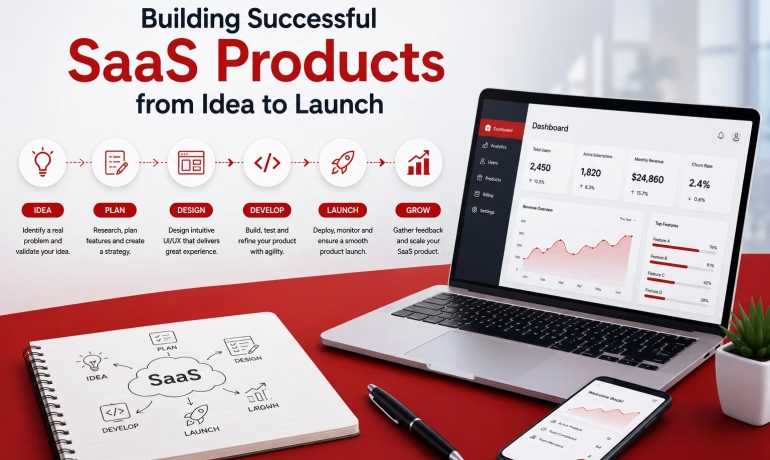



Developers designing secure SaaS application with cloud infrastructure and agile development

Many successful software products didn’t begin with a large team. Or a large office. Or even a finished product.

They usually started with a simple idea. A problem that people kept facing.

A process that took too much time.

A task that could be done in a better way. The first version wasn’t perfect.

It wasn’t expected to be. It simply needed to solve one problem well.

That’s how many SaaS products begin. Not with dozens of features. With one useful solution.

Today, SaaS product development has become one of the most practical ways for businesses to build software that grows alongside their customers.

A product is never really finished

Traditional software often worked differently. It was developed. Delivered. Installed.

The project ended. SaaS doesn’t follow that model.

Once customers begin using the product, development continues.

New requests appear. User behaviour changes. New technologies emerge.

The software keeps improving because the people using it keep changing.

That’s why successful SaaS companies think in years instead of launches.

Customers expect software to improve regularly

People no longer expect software to stay the same.

They expect updates. New features. Better performance. A smoother experience.

If nothing changes for months, customers start wondering whether the product is still evolving.

Continuous improvement has quietly become part of customer expectations.

Building a SaaS product means planning for those expectations from the beginning. Businesses exploring SaaS Product Development and How Does It Work quickly realize that continuous improvement is built into the entire development lifecycle.

SaaS product development team building scalable cloud software for business growth

Solving one problem is often enough

Many first-time founders believe a successful product needs dozens of features.

In reality, too many features often create confusion.

The products people remember usually solve one problem exceptionally well.

Scheduling meetings. Managing projects. Tracking expenses. Sharing files.

The clearer the purpose, the easier it becomes for customers to understand the value.

Growth often comes from improving that core idea rather than constantly adding new functions.

User feedback shapes the product

No development team can predict everything.

Customers always use software differently than expected.

Some features become popular. Others are ignored.

Sometimes users request improvements nobody anticipated.

That’s one of the strengths of SaaS. Feedback doesn’t arrive after the product ends.

It becomes part of the development process. Good products evolve because their users quietly guide that evolution.

Performance matters from the first login

People decide surprisingly quickly whether they like software.

If the application feels slow… They notice. If pages hesitate… They notice.

If something feels confusing… They notice that too.

First impressions aren’t created by marketing. They’re created by the product itself.

That’s why performance, usability, and reliability deserve as much attention as new features.

Security becomes part of the product

Customers trust SaaS platforms with valuable information.

Business records. Customer data. Financial information. Internal documents.

That trust has to be protected. Security isn’t something businesses add later.

It becomes part of the product from the beginning.

As software grows, customer confidence becomes just as valuable as new functionality.

Scaling should feel natural

A good SaaS product doesn’t require rebuilding every time new customers arrive. It grows gradually.

Infrastructure expands. Performance stays consistent.

Users continue working without noticing what changed behind the scenes.

Scalability isn’t something customers talk about. It’s something they experience.

When everything continues working smoothly, growth feels effortless.

Businesses of every size from new ventures to established organizations—benefit from understanding SaaS Product Development for Startups and Enterprises, where scalability and long-term growth are key priorities.

Building software is only half the journey

Many businesses focus entirely on development.

The launch date becomes the finish line.

In reality, launch day is the starting point.

Monitoring begins. Customer feedback increases. Support requests appear. New opportunities become visible.

The businesses that succeed usually keep improving long after the first version goes live.

Where Chromeis Fits

Chromeis helps businesses transform software ideas into scalable SaaS products that are designed for long-term growth rather than short-term releases.

From product planning and architecture to development, testing, deployment, and ongoing improvements, Chromeis works closely with businesses to build SaaS applications that remain reliable, secure, and ready to evolve alongside customer needs.

The focus is always on creating products people continue using, not simply products that get launched.

Final Thought

The best SaaS products don’t become successful because they include the most features.

They become successful because they solve real problems consistently.

Technology will continue changing. Customer expectations will continue evolving.

The products that survive will be the ones that keep listening, keep improving, and keep making everyday work a little easier than it was before.

FAQs

1. What is SaaS product development?

SaaS product development is the process of designing, building, deploying, and continuously improving cloud-based software that users can access through the internet without installing it on their devices.

2. Why is SaaS product development important for businesses?

It enables businesses to deliver software more efficiently, scale as customer demand grows, provide regular updates, and reduce maintenance challenges compared to traditional software.

3. How long does it take to develop a SaaS product?

Development timelines vary depending on the product’s complexity, features, and business requirements. A minimum viable product (MVP) can often be built in a few months, while larger SaaS platforms may require ongoing development.

4. What are the key features of a successful SaaS product?

Successful SaaS products typically include strong security, high performance, scalability, user-friendly design, regular updates, and the ability to evolve based on customer feedback.

5. How can businesses choose the right SaaS product development partner?

Businesses should look for a development partner with experience in SaaS architecture, cloud technologies, security, scalability, ongoing support, and a proven process for building reliable software that grows with customer needs.

Similar Post

SaaS product development team building scalable cloud software for business growth
June 18, 2026

Key Benefits of SaaS Product Development for Startups and Enterprises

Most software ideas sound good in the beginning. That’s

Team working on SaaS product development and cloud application architecture
June 1, 2026

What is SaaS Product Development and How Does It Work

Most software products don’t fail because the idea is