

Most software products don’t fail because the idea is bad. They fail because building software is much harder than it looks from the outside. At first, everything feels straightforward. There’s an idea.
A market opportunity. A problem that needs solving. The business starts imagining customers using the platform. Revenue starts getting projected. Growth plans begin. Then development starts. And reality shows up. Features take longer than expected.
Customer requirements change. New problems appear that nobody predicted. That’s why SaaS product development has become a specialized field rather than just another software project.
Building software that runs as a service is very different from building software that people install once and forget about.
Most SaaS products are never truly finished
Traditional software used to have an endpoint. A product was built. Released. Sold. The work slowed down. SaaS products work differently.
The moment a platform launches, the next phase begins. Customers provide feedback. New features are requested. Competitors release updates. Technology changes. The product keeps evolving.
That’s why SaaS businesses often think in years rather than releases. Development becomes continuous.
Customers expect improvement all the time
People rarely buy software today and leave it alone. They expect updates. Better performance. New functionality.
Improved user experiences. The challenge is that expectations never stop growing. What feels impressive today becomes standard six months later.
SaaS companies have to balance innovation with stability. Move too slowly and customers lose interest. Move too quickly and quality suffers.
Building software is only part of the challenge
Many people think product development is mostly about coding. It isn’t. Coding is important. But there are dozens of decisions surrounding the code. Who is the customer? What problem is being solved?
How will users interact with the platform? What happens when usage grows? What happens when thousands of users join?
The technical side matters. The business side matters just as much.

User experience often determines success
A surprising number of SaaS products fail despite having strong technology. The reason is simple. People don’t buy technology. They buy experiences.
If a platform feels confusing, users leave. If onboarding feels difficult, users leave. If everyday tasks require too much effort, users leave. The product may be technically impressive.
That doesn’t guarantee adoption. Good SaaS development pays attention to what users feel, not just what systems do.
Scalability becomes important earlier than expected
Many startups assume scalability is a future problem. Then growth arrives faster than expected. A platform performs well with one hundred users.
Then struggles with one thousand. Then struggles even more with ten thousand. Fixing scalability later is usually more expensive than planning for it early. That’s one reason businesses work with experienced SaaS software development companies.
The goal isn’t just building software. It’s building software that can grow. Organizations often partner with SaaS software development companies to create scalable architectures that support long-term growth without sacrificing performance or user experience.
Every feature creates responsibility
Adding features sounds exciting. Customers request them. Sales teams promote them. Developers build them.
But every feature creates maintenance. Every feature needs updates. Support. Testing. Security. Documentation. The more features a platform has, the more responsibility it creates.
Successful SaaS products learn which features to build and which features to avoid.
Security becomes part of the product
Most SaaS platforms handle customer information. Sometimes sensitive information. Sometimes critical business information. Users assume their data is protected.
And they should. Security can no longer be treated as an optional add-on. It becomes part of the product itself.
Customers may never ask about security directly. But they expect it to exist.
SaaS products succeed because they solve ongoing problems
Many software ideas sound good initially. Very few survive long term. The products that last usually have one thing in common.
They solve a problem people experience repeatedly. Not once. Not occasionally. Every day.
When a platform becomes part of a customer’s routine, retention becomes easier.
Growth becomes easier. The business becomes stronger.
Most businesses underestimate the amount of planning required
People often focus on launch day. Launch day matters. But planning matters more.
The strongest SaaS products are usually built by teams that spend time understanding the problem before building the solution.
Technology matters. But understanding users matters first.
Where Chromeis Fits
Chromeis helps businesses transform ideas into scalable SaaS platforms through practical product development strategies.
The focus remains on:
- Custom SaaS product development
- Cloud-based application architecture
- Scalable software infrastructure
- User-focused platform design
- Long-term product growth planning
The goal isn’t simply launching software. It’s creating products that remain valuable long after launch.
Final Thought
Most successful SaaS products don’t win because they have the most features. They win because they solve problems consistently.
SaaS product development is not just about writing code. It’s about building something customers continue using month after month and year after year. When software becomes genuinely useful, growth becomes much easier to sustain.
FAQs
Why do many SaaS products struggle after launch?
Because launching a product is only the beginning. SaaS businesses must continue improving features, performance, user experience, and security to meet changing customer expectations.
What makes SaaS product development different from traditional software development?
Traditional software may be released once, while SaaS platforms require continuous updates, maintenance, scalability planning, and ongoing customer support.
How important is scalability in SaaS applications?
Scalability is critical because SaaS platforms are designed to support growing numbers of users without sacrificing performance or reliability.
Why does user experience matter so much in SaaS products?
Users interact with SaaS platforms regularly. If tasks feel difficult, confusing, or slow, customers often switch to alternatives regardless of the platform’s technical capabilities.
How can Chromeis help businesses build SaaS products?
Chromeis helps organizations plan, design, develop, and scale SaaS applications by focusing on architecture, user experience, cloud infrastructure, and long-term product growth.
Similar Post

Essential Considerations Before Starting SaaS Product Development
Software has changed the way businesses operate. Companies no
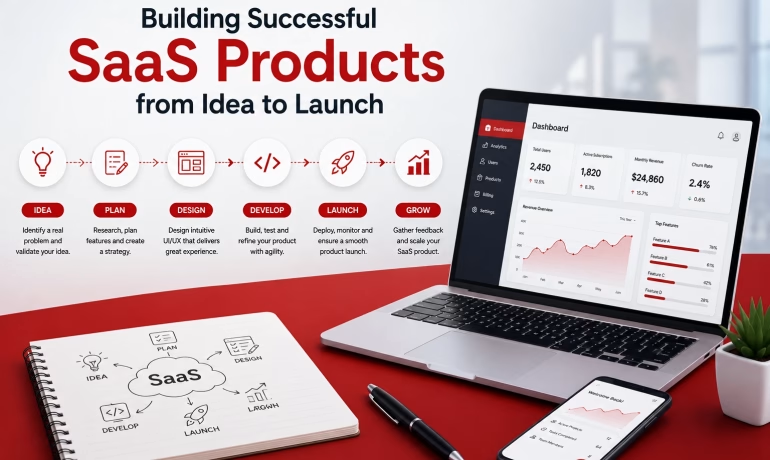
Building Successful SaaS Products from Idea to Launch
Every successful SaaS product starts the same way. Not