
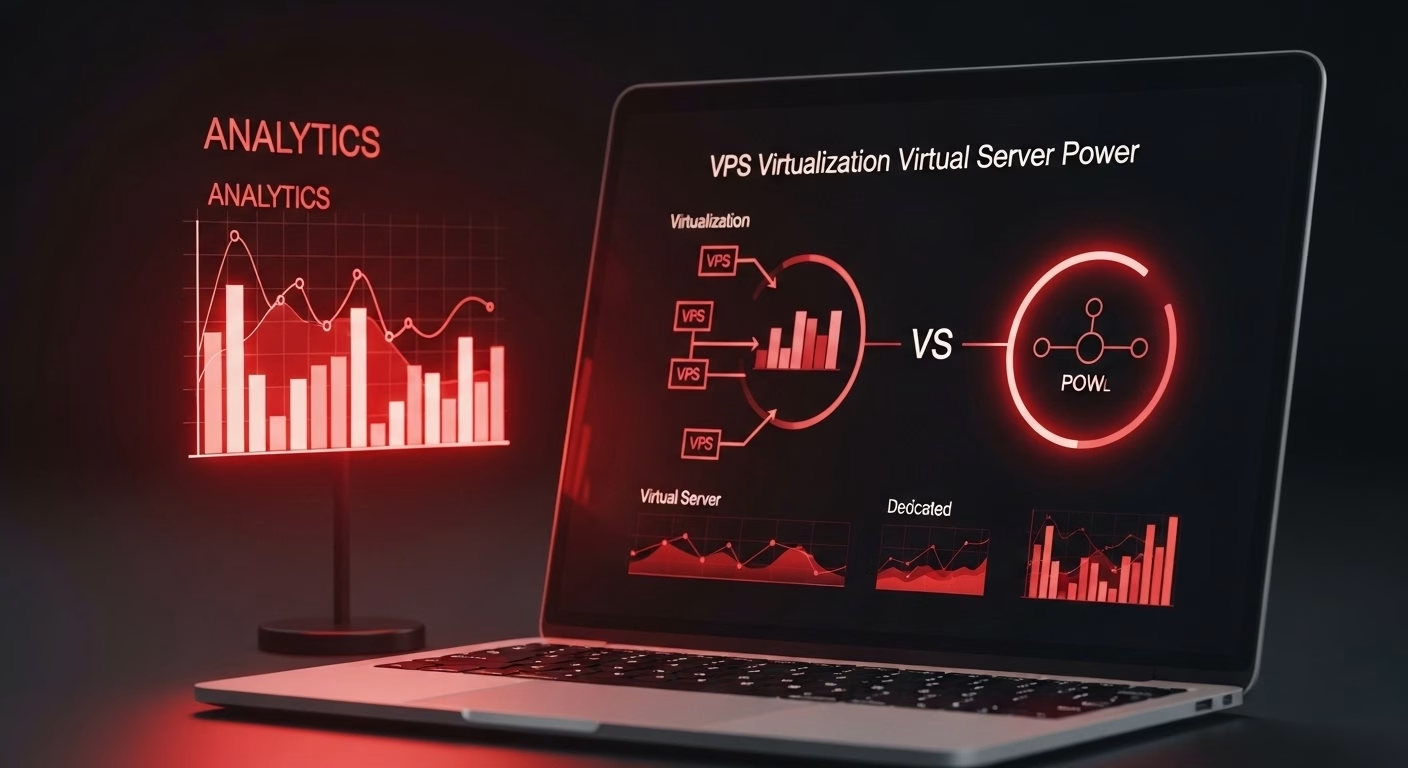
Not every business reaches the point where hosting becomes a serious technical decision. But the ones that do usually arrive there the same way slowly. At first, a normal server setup handles everything. Traffic is manageable. Applications are light. Nothing feels strained. Then, as systems grow heavier and users increase, the small cracks begin to show. Performance dips at busy hours. Processes compete for memory. Stability starts to feel uncertain instead of guaranteed. This is usually the moment when teams begin comparing VPS and Virtual Dedicated Server (VDS) environments, even if the difference between the two isn’t immediately clear.
When “Good Enough” Performance Stops Being Enough
A VPS works by dividing one physical machine into several isolated environments. Each user receives allocated resources RAM, CPU, storage that others cannot directly consume. For many growing businesses, this alone solves the instability of shared hosting. But high-performance workloads behave differently. Applications that process large datasets, handle continuous user activity, or require strict response times begin pushing against those virtual limits. Even with guaranteed allocations, the underlying hardware is still shared at a deeper level. That’s where VDS hosting in Pakistan enters the conversation.
A Virtual Dedicated Server provides something closer to full physical isolation. Resources are not just reserved they are structurally separated in a way that behaves much more like a dedicated machine. For organizations evaluating scalable infrastructure options, understanding why Cloud VDS Is the Ideal Hosting Solution can help clarify how modern virtual dedicated environments deliver stronger stability for demanding workloads.
The technical wording sounds subtle. The real-world difference is not.
Understanding the Practical Gap Between VPS and VDS
From a distance, VPS and VDS hosting in Pakistan may look similar. Both are virtualized. Both offer control. Both cost less than a physical dedicated server. But inside daily operation, the experience diverges.
A VPS server environment is ideal when:
- Workloads are steady but not extreme
- Flexibility and affordability matter
- Occasional resource sharing is acceptable
- Applications can tolerate minor variation in performance
A virtual dedicated server setup becomes more suitable when:
- Applications must run continuously without fluctuation
- Processing demand is consistently high
- Database or enterprise systems require isolation
- Predictable response time is critical for users
Businesses needing dedicated operating environments often choose Linux/Windows VDS Pakistan solutions that provide stronger system isolation and full administrative control. So the real question is not which is better. It is which matches the pressure your systems actually face.
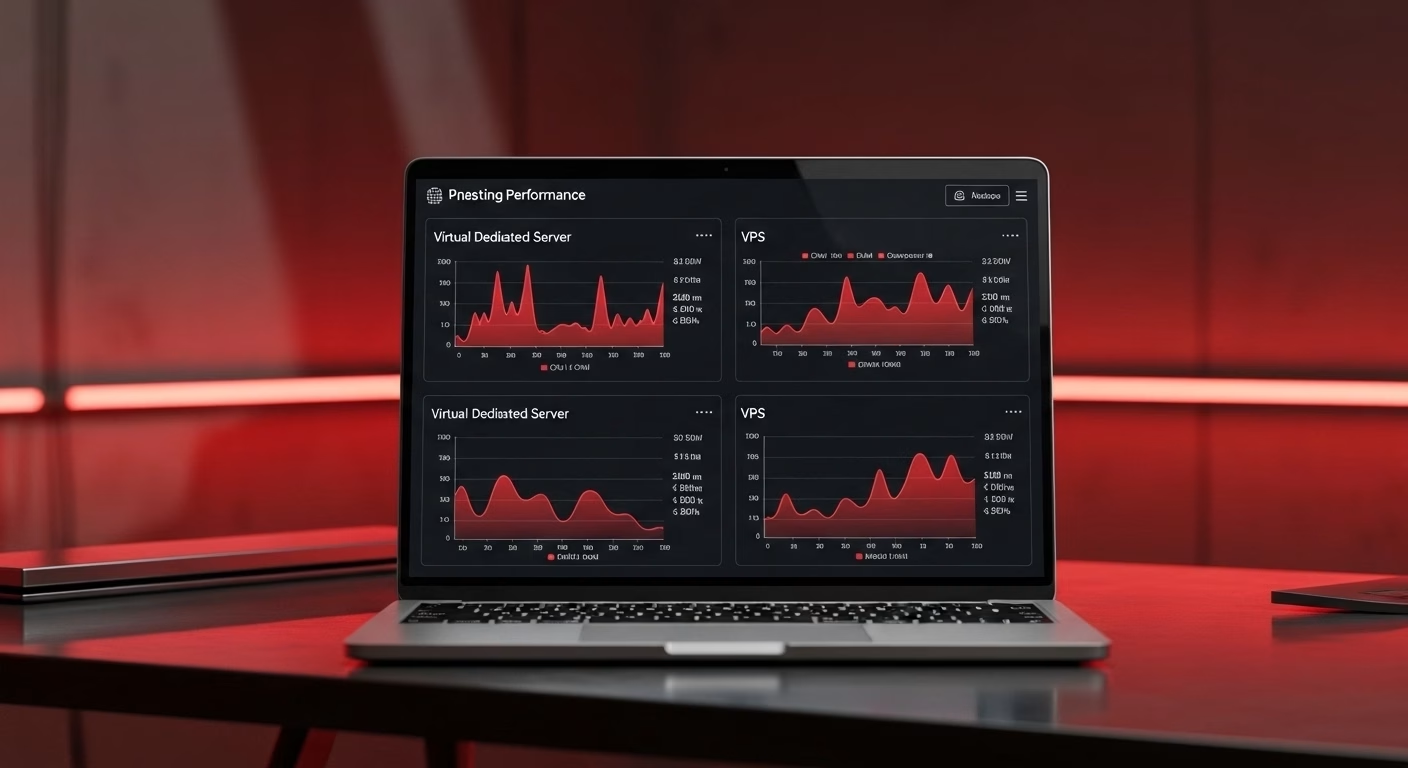
Why High-Performance Systems Lean Toward VDS
As businesses grow, infrastructure stops being background technology and starts influencing real outcomes customer experience, internal productivity, even revenue flow.
In these situations, SSD VDS environments provide noticeable advantages:
- Stable processing without hidden contention
- Stronger isolation for sensitive workloads
- Better suitability for enterprise software
- Reduced latency during continuous operations
These improvements rarely appear dramatic in marketing comparisons. Instead, they show up quietly in smoother dashboards, faster queries, and fewer unexpected slowdowns. For teams managing serious platforms, quiet stability matters more than impressive specifications.
Cost, Expectation, and Long-Term Planning
Budget conversations always enter the decision somewhere. A VDS plan will still cost more than a typical VPS, and that difference naturally raises hesitation. But infrastructure decisions rarely make sense when viewed only through monthly pricing.
The more useful perspective asks:
- What happens if performance fails during peak usage?
- How much downtime can operations tolerate?
- What is the cost of slow internal systems for staff productivity?
When systems directly support customers or revenue, the price gap between VPS and VDS often becomes small compared to the operational risk of choosing too little power. In other words, the real expense is usually under-performance, not hosting itself.
Operating System Flexibility and Enterprise Demands
Modern businesses rarely run a single simple application. They operate combinations of dashboards, APIs, automation tools, and databases sometimes across both Linux and Windows environments.
Infrastructure like Linux/Windows VDS Pakistan handles this complexity more comfortably because:
- Resource allocation remains consistent under load
- Enterprise software runs without contention
- Virtualization overhead is significantly reduced
For enterprise hosting needs, these factors are less about convenience and more about reliability. Systems must behave predictably every day, not only during testing.
Situations Where VPS Still Makes Perfect Sense
Despite the advantages of VDS, VPS hosting remains the right solution for many scenarios.
Businesses often choose VPS when:
- Projects are still scaling gradually
- Traffic patterns remain moderate
- Development flexibility matters more than raw power
- Budgets must stay tightly controlled
In these cases, a well-configured VPS delivers strong performance without unnecessary cost. Choosing VDS too early can be just as inefficient as choosing VPS too late. Good infrastructure planning is less about technology labels and more about timing.
Deciding Based on Workload Reality, Not Marketing Language
Hosting comparisons online often focus on specifications cores, gigabytes, benchmarks.
But real-world decisions usually come down to simpler questions:
- Do slowdowns interrupt daily work?
- Are customers affected by performance dips?
- Is the system expected to grow rapidly?
- Would downtime create financial or reputational damage?
If the answer to several of these is yes, movement toward high-performance server environments like VDS becomes logical rather than optional.
How Chromeis Guides Businesses Toward the Right Server Choice
At Chromeis, the conversation around VPS and VDS rarely starts with products. It begins with understanding how the business actually operates. Some organizations truly benefit from the flexibility of VPS. Others quietly struggle until they move to more isolated dedicated environments like VDS.
The focus stays practical:
- Matching infrastructure to real workload pressure
- Avoiding unnecessary cost while preventing future limits
- Providing stable, scalable enterprise hosting solutions
- Supporting both growth and reliability without disruption
Because in the end, the right server is not the most powerful one. It is the one that lets the business run smoothly without thinking about servers at all.
FAQs
1. What is the main difference between VPS and VDS hosting?
VPS hosting divides a physical server into multiple virtual environments with allocated resources, while VDS provides stronger isolation that behaves more like a dedicated server with dedicated hardware-level resource separation.
2. When should a business choose VDS instead of VPS?
Businesses should consider VDS when applications require consistent performance, heavy processing power, database isolation, or continuous uptime for enterprise-level workloads.
3. Can VDS hosting run both Linux and Windows operating systems?
Yes, modern VDS infrastructure supports both Linux and Windows environments, allowing businesses to choose the operating system that best matches their software and development requirements.
4. Is VDS hosting suitable for growing businesses?
Yes. VDS hosting is ideal for businesses experiencing high traffic, complex applications, or enterprise workloads that require stable performance and dedicated resources.
Similar Post

How GPU Servers Accelerate High-Performance Computing
Artificial intelligence has moved from being a specialized technology
How Cloud VPS Hosting Supports Growing Online Businesses
Running an online business requires more than just having