

Most people think mobile app development starts with coding. It doesn’t. It starts with confusion. A business knows it needs an app, but not exactly what kind. iOS, Android, or both. Simple or feature-heavy. Fast launch or long-term product. Everyone has opinions. Few have clarity.
Professional mobile app development is about turning that confusion into something usable not just building screens, but building something that survives real users.
Apps don’t fail because of code alone
When apps fail, it’s rarely because developers couldn’t code. They fail because assumptions were wrong. Assumptions about how users behave. Assumptions about how often features are used. Assumptions about performance, devices, and networks.
This is where a professional mobile app development company differs from quick-build teams. Assumptions are questioned early, before they become expensive fixes.
iOS and Android behave differently, even when apps look the same
From the outside, iOS and Android apps can look identical. Underneath, they are not.
iOS app development follows stricter design and performance rules. Apple controls devices tightly. Updates roll out consistently. User expectations are shaped by a controlled ecosystem.
Android app development deals with variety. Different devices. Different screen sizes. Different hardware capabilities. More flexibility, but more complexity. Professional teams don’t treat iOS and Android as one problem. They respect the differences and plan for them.
Planning matters more than features
Many apps start with long feature lists. Login. Payments. Notifications. Dashboards. Integrations. Features feel productive.
Professional mobile app development starts with flows, not features. What does the user do first? What happens if they stop halfway? What happens when the network is slow? What happens when something fails?
Answering these questions early is what separates stable apps from those that struggle later.
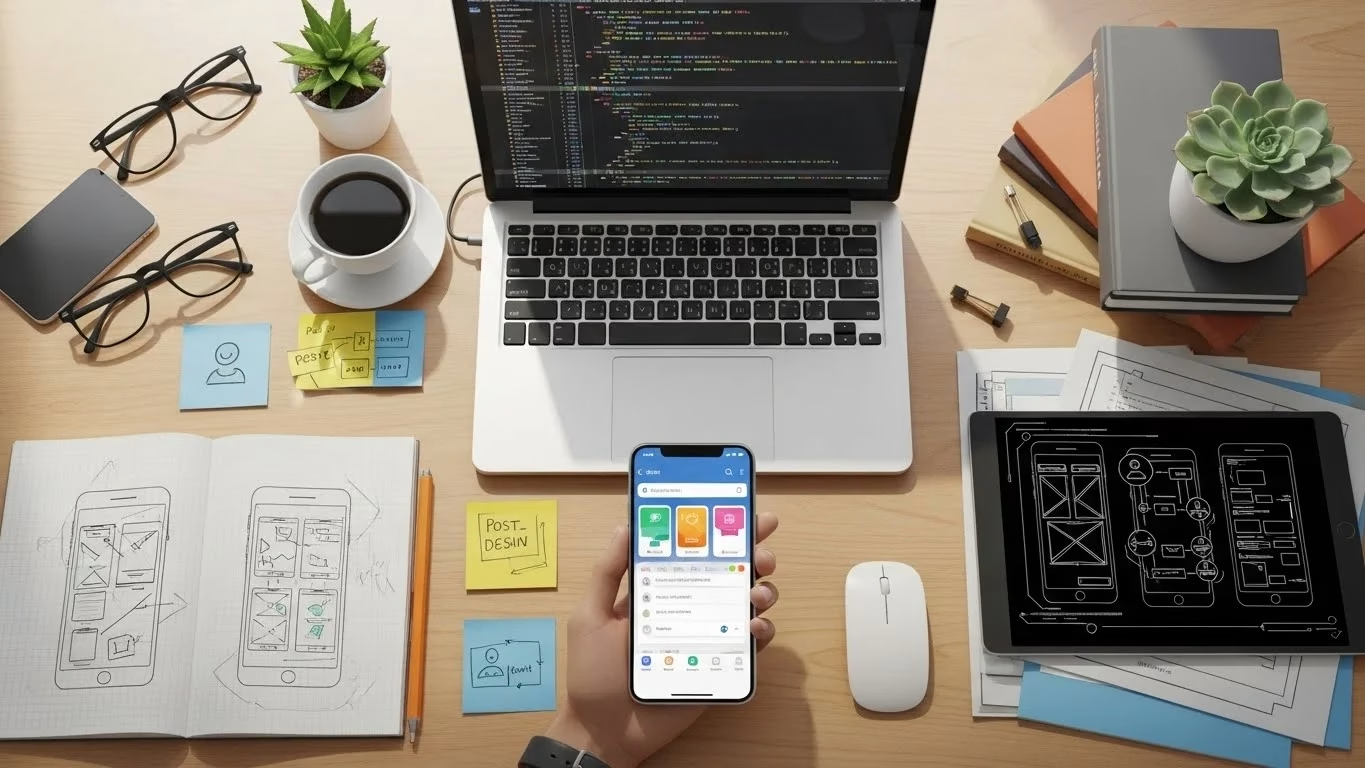
Design is not decoration in mobile apps
Mobile UI is unforgiving. There’s less space. Less patience. Less tolerance for confusion.
A button in the wrong place matters more on a phone than on a desktop. A slow screen feels slower on mobile. A confusing flow feels worse when the user is holding a device in one hand.
Professional mobile app development treats UI and UX as part of functionality, not as a visual layer added at the end.
Performance is noticed immediately on mobile
Mobile users don’t wait. If an app takes too long to load, they leave. If it freezes, they uninstall. If it crashes twice, they don’t come back.
Performance issues show up faster on mobile than anywhere else. Professional teams test on real devices, not just emulators. They consider memory usage, battery impact, and network conditions early — not after complaints start appearing.
APIs and backend shape the app experience
Apps don’t exist alone. They talk to servers. Fetch data. Sync states. Handle authentication.
A poorly designed backend makes even a well-designed app feel broken. This is why professional mobile app development treats backend and app as one system. APIs are designed for mobile behavior, not adapted from web systems as an afterthought.
Testing is continuous, not final
One of the biggest differences between amateur and professional development is testing. Testing isn’t something that happens at the end.
It happens when features are added, when flows change, when performance is optimized, and when devices vary. Professional teams test across OS versions, screen sizes, and real-world usage patterns — reducing surprises after launch.
Security isn’t optional on mobile
Mobile apps handle sensitive data. User accounts. Payments. Personal information. Location data.
Security mistakes on mobile feel personal to users. Trust breaks quickly. Professional mobile app development includes secure authentication, encrypted data handling, and careful permission management from the start not as a patch.
Updates are part of the product lifecycle
Apps don’t launch and stop. They evolve. New OS versions are released. Devices change. User behavior shifts.
Professional teams plan for updates from day one. Codebases are structured to handle growth instead of becoming fragile with every change. This is especially important for businesses that don’t want their apps to become part of the problem described in Why 2026 Will Be the Year Outdated Mobile Apps Finally Collapse.
Cross-platform vs native decisions matter
Many businesses ask one question early: should we build one app or two? There’s no universal answer.
Cross-platform solutions can speed up development but introduce limitations. Native development offers better control but requires more effort. Professional teams choose based on performance needs, complexity, timeline, and budget not trends.
App store guidelines influence development
App development doesn’t end with code. Both Apple and Google have rules. Submission guidelines. Privacy policies. Performance standards.
Professional teams build with these guidelines in mind, reducing rejection risks and launch delays. Ignoring store policies often leads to wasted work.
Maintenance is where quality shows
The real test of an app comes after launch. Bug reports. Feature requests. OS updates. User feedback.
Professional mobile app development includes maintenance plans. Issues are tracked. Improvements are prioritized. The app grows without losing stability. This is where many inexperienced teams struggle the most.
Why professional development matters in Pakistan
In Pakistan, many apps are built quickly to meet deadlines or budgets. Speed matters but quality matters longer. Users compare local apps with global ones.
That’s why businesses increasingly look for a top mobile app development company in Pakistan that focuses on long-term usability, not just launch-day delivery.
Where ChromeIS fits
ChromeIS approaches mobile app development with a system mindset.
The focus is not just on writing code, but on:
- understanding user behavior
- designing scalable flows
- building stable iOS and Android apps
- testing across real-world conditions
- supporting growth after launch
The goal isn’t just to release an app it’s to keep it usable as the business grows.
Final thought
Professional mobile app development isn’t about technology stacks or buzzwords. It’s about discipline. Discipline in planning. Discipline in design. Discipline in testing. Discipline in maintenance.
iOS and Android apps that succeed aren’t built faster. They’re built more thoughtfully. And that difference shows the moment real users start using them.
Similar Post

How Businesses Scale Digitally with Expert Mobile App Development
At some point, a website stops being enough. Customers

Why 2026 Will Be the Year Outdated Mobile Apps Finally Collapse
For years, companies in Pakistan have held onto outdated