
Software has changed the way businesses operate.
Companies no longer need to rely only on traditional desktop applications or locally installed systems.
Today, businesses and customers expect software that is accessible anywhere, updated regularly, and easy to scale.
This is one reason SaaS product development has become increasingly popular among technology companies and entrepreneurs.
Software as a Service (SaaS) allows users to access applications through the internet instead of installing and maintaining software on individual devices.
However, building a successful SaaS product requires more than just developing an application.
Businesses need careful planning, clear objectives, and the right technical approach before starting development.
Define the Problem Your SaaS Product Will Solve

Every successful SaaS product begins with a clear purpose.
Before writing code, businesses need to understand the problem they want to solve.
What challenge will the product address?
Who will use it?
Why would customers choose it over existing solutions?
A common mistake is building software because an idea sounds interesting without confirming whether there is a real market need.
Understanding customer problems creates a stronger foundation for product development. Businesses that are still exploring the development process can also review SaaS Product Development: Everything Businesses Need to Know to better understand the major stages involved in turning an idea into a functional SaaS solution.
Identify the Target Users
A SaaS product should be designed around the people who will actually use it.
Businesses should define:
- Target customers
- User expectations
- Common workflows
- Technical requirements
- Business goals
A product designed for small businesses will have different requirements from one built for large enterprises.
Knowing the audience helps developers create features that provide real value instead of unnecessary complexity.
Plan the Core Features Carefully
Many SaaS products fail because they attempt to include too many features from the beginning.
A better approach is identifying the minimum viable product (MVP).
An MVP includes the essential features required to solve the customer’s main problem.
Launching with a focused product allows businesses to collect feedback, understand user behaviour, and improve the platform based on real usage.
Additional features can be introduced as the product grows.
For emerging companies in particular, this flexible approach can make software development more manageable. Understanding the key benefits of SaaS product development for startups can also help businesses evaluate how SaaS supports growth, accessibility, and long-term scalability.
Choose the Right Technology Architecture
The technical foundation of a SaaS product affects its future success.
Businesses need to consider:
- Cloud infrastructure
- Database design
- Application performance
- Security requirements
- Scalability options
A poorly planned architecture may create limitations as the user base increases.
Choosing the right technology stack from the beginning helps ensure the application can support future growth.
Scalability Should Be Part of the Design
Successful SaaS products often grow faster than expected.
More users.
More data.
More transactions.
More system activity.
The platform should be designed to handle increasing demand without major redesigns.
Scalable architecture allows businesses to expand their services while maintaining performance and reliability.
Security Cannot Be an Afterthought
SaaS applications often manage sensitive information.
Customer details.
Business records.
Financial information.
Internal documents.
Security should be considered during every stage of development.
Important areas include:
- User authentication
- Data encryption
- Access controls
- Secure coding practices
- Regular security testing
Building security into the product from the beginning reduces risks later.
Focus on User Experience
A technically powerful application can still fail if users find it difficult to use.
SaaS products should provide:
- Simple navigation
- Clear workflows
- Responsive design
- Easy onboarding
Users should understand how to complete tasks without unnecessary confusion.
A positive user experience improves adoption and encourages customers to continue using the platform.
Consider Integration Requirements
Modern businesses rarely use only one software system.
They rely on multiple tools.
Customer management platforms.
Payment systems.
Communication applications.
Business analytics tools.
SaaS products often become more valuable when they can connect with existing business systems.
Planning integrations early helps create a more useful and flexible product.
Develop a Clear Maintenance Strategy
Launching the product is only the beginning.
SaaS applications require continuous improvement.
Bug fixes.
Security updates.
Performance improvements.
New features.
Unlike traditional software, SaaS products are continuously evolving.
A long-term maintenance strategy helps businesses keep customers satisfied and maintain product quality.
Select the Right Development Partner
Building SaaS software requires experience across different areas.
Software development.
Cloud infrastructure.
Security.
User experience.
Testing.
Deployment.
Choosing a development partner with the right technical expertise helps businesses avoid common development challenges and create a stronger product foundation.
Where Chromeis Fits
Chromeis helps businesses transform SaaS ideas into reliable software solutions through professional SaaS product development services.
From planning and architecture design to application development, cloud deployment, testing, and ongoing improvements, Chromeis supports organizations throughout the SaaS development lifecycle.
The focus is on creating scalable, secure, and user-friendly software products that help businesses deliver value to their customers.
Final Thought
Building a SaaS product is not only a software development project.
It is a long-term business investment.
Successful SaaS products combine a clear market need, strong technology foundation, reliable security, and continuous improvement.
With proper planning before development begins, businesses can create software solutions that grow with their customers and remain valuable over time.
Frequently Asked Questions
1. What should businesses consider before starting SaaS product development?
Businesses should first define the problem the product will solve, identify target users, determine core features, select an appropriate technology architecture, and plan for security, scalability, integrations, and ongoing maintenance.
2. Why is scalability important in SaaS product development?
Scalability allows a SaaS application to support increasing numbers of users, transactions, and data without requiring major changes to the underlying system. Planning for scalability early can make future growth easier to manage.
3. Should a SaaS product start with an MVP?
An MVP can be an effective way to launch a SaaS product with essential functionality before investing in a larger feature set. It allows businesses to gather user feedback, validate assumptions, and prioritize future improvements based on actual usage.
4. How important is security when developing a SaaS application?
Security is an important part of SaaS development because these applications may process or store customer, financial, business, and other sensitive information. Authentication, encryption, access controls, secure coding, and regular security testing should be considered throughout development.
5. How do you choose the right SaaS development partner?
Businesses should consider a development partner’s experience with software architecture, cloud infrastructure, security, UI/UX, testing, deployment, scalability, and ongoing maintenance. The partner should also understand the product’s business goals and long-term technical requirements.
Similar Post
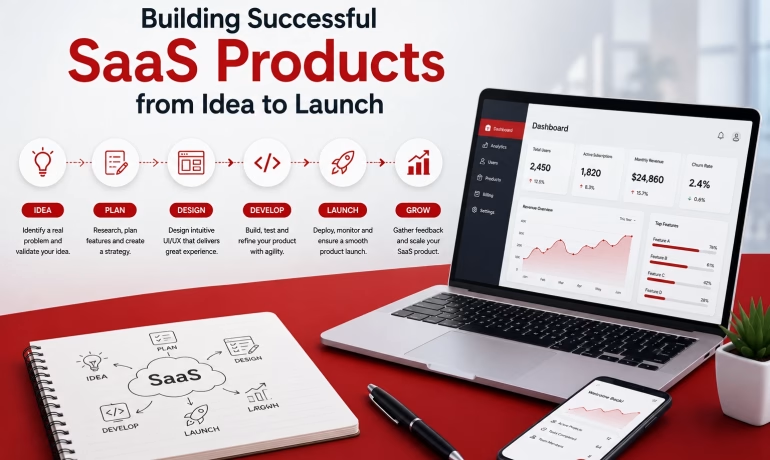
Building Successful SaaS Products from Idea to Launch
Every successful SaaS product starts the same way. Not

SaaS Product Development: Everything Businesses Need to Know
Many successful software products didn’t begin with a large