
Businesses generate information every day.
Sales are recorded.
Customers place orders.
Marketing campaigns collect data.
Support teams solve problems.
Finance tracks expenses.
Most organizations already have plenty of information.
The real challenge is understanding what that information is trying to say.
A spreadsheet full of numbers doesn’t automatically explain why sales increased. Or why customers stopped buying a particular product. Or why one marketing campaign performed better than another.
This is where Advanced Analytics Services become valuable. They help businesses move beyond collecting data and begin using it to make better decisions.
For organizations exploring advanced analytics in Pakistan, the focus is increasingly shifting toward practical solutions that can turn business information into measurable insights and better operational decisions.
Looking Back Is Useful, but Looking Ahead Is Better
Traditional reports usually explain what has already happened.
Revenue increased.
Website traffic declined.
Expenses went up.
These reports are important because they help businesses understand past performance.
Advanced analytics goes a step further. It looks for patterns, relationships, and trends that may influence future decisions.
Instead of asking, “What happened?”
Businesses begin asking, “What is likely to happen next?”
That shift changes the way decisions are made.
Businesses looking to understand how analytics can support this transition can explore Advanced Analytics: Turning Business Data Into Better Decisions for additional insights into using business data more effectively.
Data Becomes Easier to Understand
Most business leaders don’t want hundreds of pages of raw information.
They want clear answers.
Which products are performing well?
Which customers are buying most often?
Where are costs increasing?
Which marketing channels are delivering results?
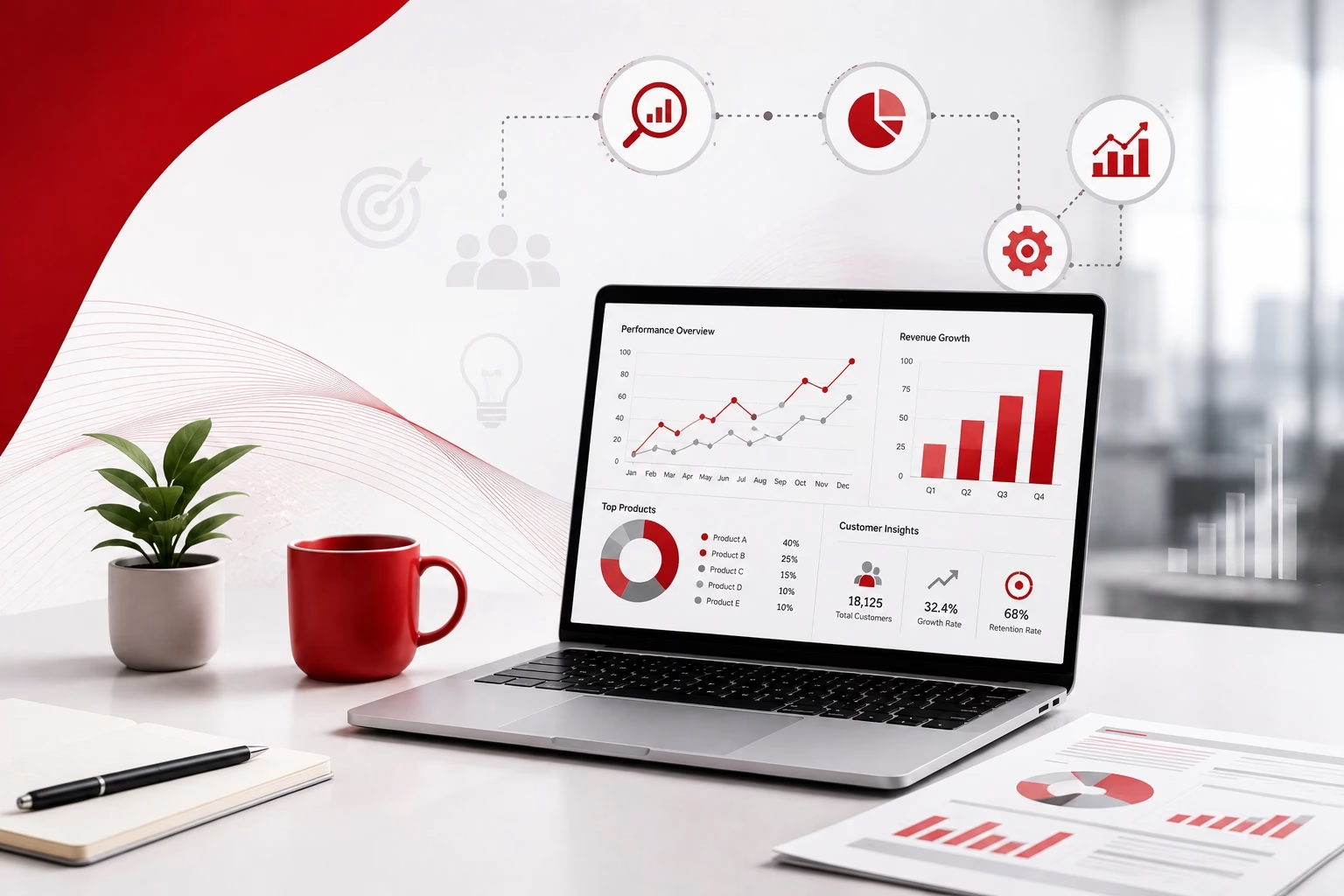
Advanced analytics transforms large volumes of information into dashboards, charts, and insights that are much easier to interpret.
Decision-makers spend less time searching for answers and more time acting on them.
Better Forecasting Supports Better Planning
Every business plans for the future.
Inventory.
Hiring.
Marketing budgets.
Business expansion.
The quality of those plans depends on the quality of available information.
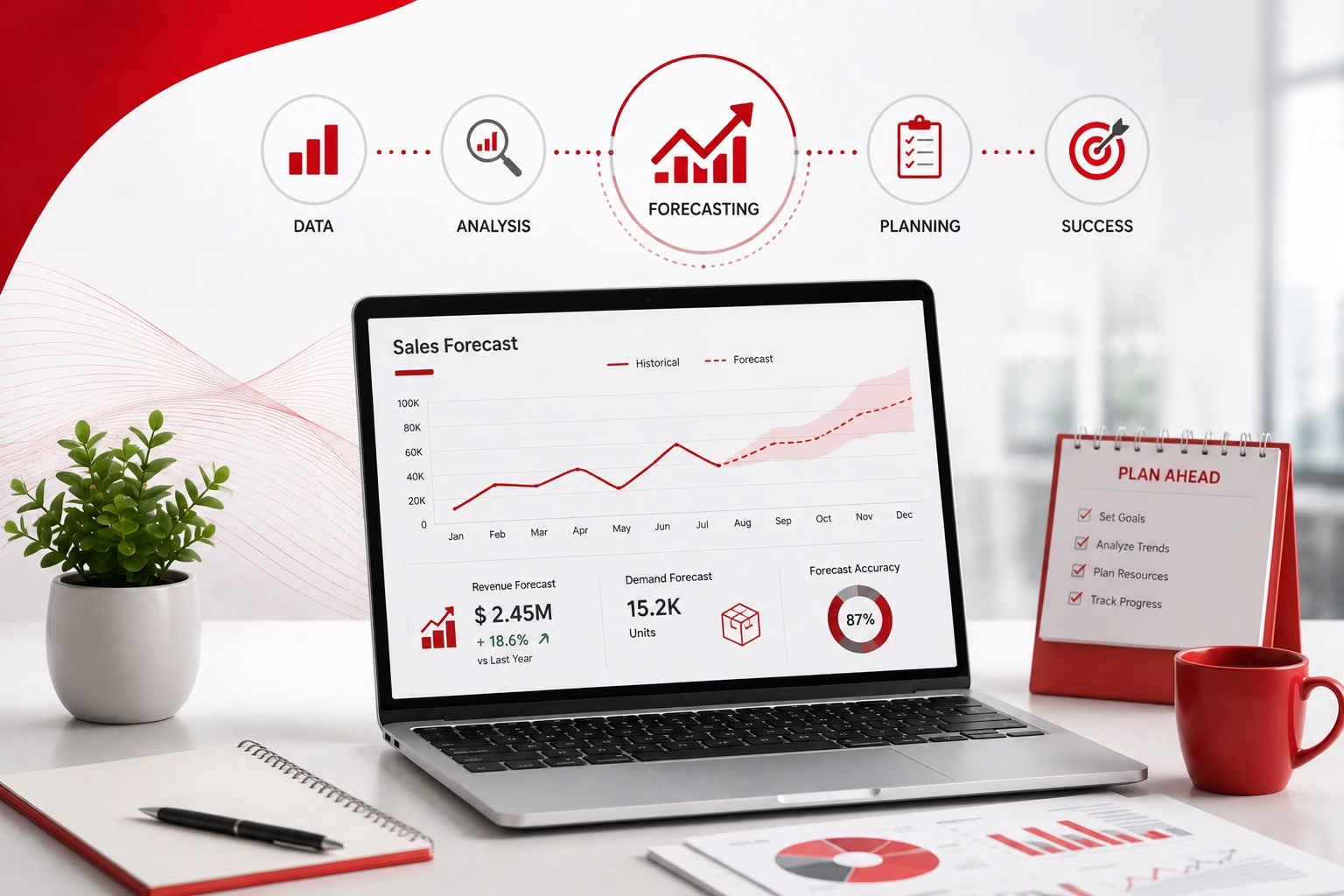
Using Trend Analysis & Forecasting, businesses can identify historical patterns that help estimate future demand, seasonal changes, and operational requirements.
Forecasts won’t predict the future perfectly. They make planning much more informed than relying on assumptions alone.
Customer Behaviour Tells an Important Story
Customers leave valuable clues through their actions.
What they buy.
How often they return.
Which products they ignore.
When they stop engaging.
Advanced analytics helps businesses understand these behaviours in greater detail.
Instead of treating every customer the same, organizations can identify different buying patterns and respond more effectively.
Better understanding often leads to better customer experiences.
Marketing Decisions Become More Measurable
Marketing budgets should create results.
Without proper analysis, businesses often continue investing in campaigns without knowing which ones actually work.
Advanced analytics measures customer engagement, conversion rates, campaign performance, and return on investment.
This allows businesses to invest more confidently in activities producing measurable outcomes.
One of the most valuable applications is Predictive Analytics for ROI Optimization, where historical performance helps guide future marketing decisions.
For businesses looking for a broader approach to data-driven decision-making, Advanced Analytics Solutions for Data-Driven Business Growth provides another perspective on how analytics can support business growth.
Machine Learning Adds Another Layer of Insight
As business data grows, manual analysis becomes increasingly difficult.
Machine learning helps identify relationships within large datasets that might otherwise remain unnoticed.
It can recognize unusual patterns, detect changing customer behaviour, and improve forecasting over time.
The objective isn’t replacing business judgment.
It’s giving decision-makers better information before making important choices.
That’s why many organizations are adopting Machine Learning Analytics as part of their long-term data strategy.
Analytics Benefits Every Department
Advanced analytics isn’t limited to executive management.
Sales teams monitor customer activity.
Finance reviews spending patterns.
Operations measure productivity.
Customer support identifies recurring issues.
Marketing evaluates campaign performance.
When departments work with reliable insights instead of assumptions, decisions become more consistent across the entire organization.
Good Decisions Depend on Good Data
Analytics can only be as reliable as the information behind it.
Incomplete records.
Duplicate entries.
Outdated information.
Disconnected systems.
These issues reduce the value of any analysis.
Businesses that maintain clean, organized, and consistent data usually achieve better results because their insights reflect reality more accurately.
Where Chromeis Fits
Chromeis helps businesses transform everyday business data into meaningful insights through Advanced Analytics Services designed around real operational goals.
By combining business intelligence, machine learning analytics, predictive analytics, trend analysis, and customized reporting, Chromeis enables organizations to understand performance more clearly, identify growth opportunities, and make confident decisions based on reliable information instead of guesswork.
The objective is to help businesses turn data into measurable business value.
Final Thought
Every business has data.
Not every business has insight.
The difference lies in how information is analyzed and applied.
Advanced analytics helps organizations understand what their data is saying, recognize opportunities earlier, and make decisions with greater confidence.
In a competitive business environment, better decisions often begin with better understanding.
Frequently Asked Questions
1. What is advanced analytics in business?
Advanced analytics uses techniques such as predictive analytics, trend analysis, machine learning, and business intelligence to identify patterns in business data and support better decision-making.
2. How can advanced analytics help businesses make better decisions?
It helps businesses understand past performance, identify trends, forecast potential outcomes, evaluate customer behaviour, and make decisions using data rather than assumptions.
3. Can advanced analytics improve marketing performance?
Yes. Advanced analytics can measure campaign performance, customer engagement, conversion rates, and return on investment, helping businesses identify which marketing activities are producing better results.
4. Why is data quality important for advanced analytics?
Analytics depends on the information being analyzed. Incomplete, duplicated, outdated, or inconsistent data can produce less reliable insights and make business decisions more difficult.
5. Is advanced analytics useful for small and growing businesses?
Yes. Advanced analytics can help growing businesses understand customers, monitor performance, identify trends, forecast demand, and make more informed decisions as operations become more complex.
Similar Post

Advanced Analytics: Turning Business Data into Better Decisions
Every business collects data. Sales reports. Customer inquiries. Website

Advanced Analytics Solutions for Data-Driven Business Growth
Most businesses already have data. In fact, many have