


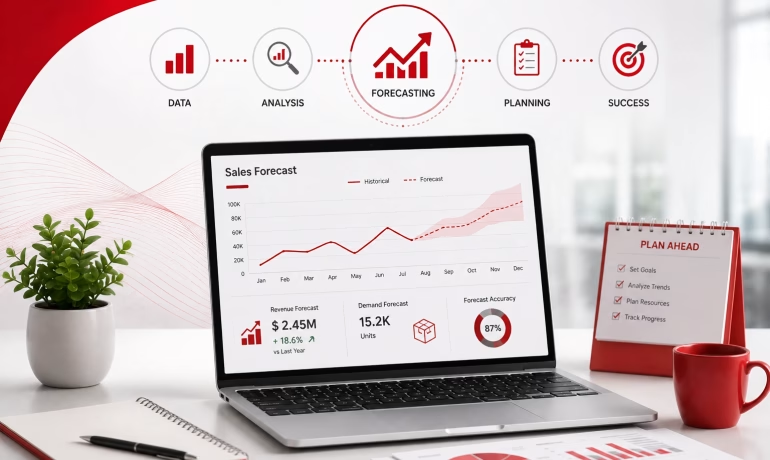
Business professionals analyzing data using advanced analytics and machine learning dashboards

Most businesses already have data. In fact, many have too much of it. Sales reports. Customer records. Website analytics. Marketing dashboards.
Financial data. Information keeps growing every month.

The problem isn’t collecting it. The problem is knowing what to do with it.

That’s why many companies reach a point where spreadsheets and basic reports stop being enough. Not because they’re broken.

But because the business needs better answers. That’s usually when organizations begin exploring advanced analytics in Pakistan.

Not to collect more information. But to understand the information they already have.

Data doesn’t automatically create insight

Businesses often assume that having more data means making better decisions. Unfortunately, that isn’t always true. Many companies collect information for years.

Yet when important decisions need to be made, uncertainty still exists.

  • Which customers are most valuable?
  • Which products generate the highest long-term returns?
  • Which marketing channels actually contribute to revenue?

The data may already contain those answers. The challenge is finding them.

Reports explain the past. Analytics helps explain the future.

Traditional reporting focuses on what already happened. Sales increased.

Traffic decreased. Costs changed. These insights are useful.

But they don’t always help businesses prepare for what’s next.

Modern analytics looks beyond historical reporting.

It helps identify patterns. Relationships. Trends that would otherwise remain hidden.

This is where Trend Analysis & Forecasting becomes valuable.

Businesses looking to understand how Advanced Analytics Helps Businesses Make Better Decisions can benefit from using predictive insights instead of relying solely on historical reports.

Advanced analytics dashboard displaying business growth metrics and real-time data visualization

Growth becomes harder to manage without visibility

Small businesses can often operate on intuition. Owners know customers personally.

Teams remain close to daily operations. Decisions happen quickly.

As businesses grow, that becomes more difficult. Customer numbers increase.

Operations become more complex. Departments become larger.

Visibility starts decreasing. Analytics helps restore that visibility.

Customer behavior is constantly changing

One of the biggest challenges businesses face is understanding customer behavior.

What customers wanted last year may not be what they want today.

Buying habits evolve. Preferences change. Markets shift.

Without proper analysis, these changes are often noticed too late.

Businesses react after opportunities have already passed.

Analytics helps identify these shifts earlier.

Patterns are easier to see when data is connected

Many organizations store information in separate systems. Sales platforms.

Marketing tools. Customer databases. Financial systems. Each contains valuable information.

Individually, however, the picture remains incomplete. Advanced analytics connects these sources.

The result is a clearer view of how the business actually operates.

Predictions reduce uncertainty

No business can predict the future perfectly. But businesses can reduce uncertainty.

That’s where Predictive Analytics for ROI Optimization becomes useful.

Instead of guessing outcomes, organizations use historical data to estimate likely results.

This improves planning. Budget allocation. Resource management. Decision-making becomes more informed.

Analytics supports better resource allocation

Resources are always limited. Time. Budget. People.

Businesses constantly decide where those resources should go.

Without data, those decisions rely heavily on assumptions.

Analytics provides evidence. It helps leaders understand which activities contribute most to growth and which do not.

Machine learning is becoming more practical

For many years, machine learning felt like something only large corporations could use. That’s changing.

Today, Machine Learning Analytics helps businesses identify patterns that would be difficult for humans to detect manually.

The technology is becoming more accessible. More practical.

And increasingly valuable for organizations that want deeper insights.

Organizations embracing Smarter Decisions Using Modern Advanced Analytics Solutions gain a competitive advantage by transforming complex data into actionable business intelligence.

Many businesses already have the answers

They just can’t see them.

One of the most interesting things about analytics projects is that businesses often already possess the information they need.

The challenge isn’t collection. It’s interpretation.

Important opportunities often remain hidden inside existing datasets simply because nobody is analyzing them effectively.

Where Chromeis Fits

Chromeis helps businesses transform raw information into actionable insights through structured Advanced Analytics Services.

By combining data integration, trend analysis, predictive modeling, business intelligence, and machine learning analytics, Chromeis helps organizations understand performance more clearly and make decisions with greater confidence.

The focus remains on practical outcomes that support measurable business growth rather than overwhelming teams with unnecessary complexity.

Final Thought

Data becomes valuable when it helps businesses make better decisions.

Collecting information is relatively easy. Understanding it is far more difficult.

Advanced analytics bridges that gap by turning large amounts of information into meaningful insights.

When organizations can clearly understand customers, operations, and future trends, they become better equipped to adapt, compete, and grow with confidence.

FAQs

1. What are Advanced Analytics Services?

Advanced Analytics Services use technologies such as predictive analytics, machine learning, statistical modeling, and business intelligence to help organizations uncover insights, forecast trends, and improve business decisions using existing data.

2. How can advanced analytics help businesses grow?

Advanced analytics helps businesses identify customer trends, optimize operations, improve marketing performance, forecast demand, and allocate resources more effectively, leading to smarter growth strategies.

3. What is the difference between reporting and advanced analytics?

Traditional reporting explains what has already happened using historical data. Advanced analytics goes further by identifying patterns, predicting future outcomes, and recommending data-driven actions.

4. Which industries benefit from advanced analytics?

Industries including retail, healthcare, finance, manufacturing, logistics, education, telecommunications, and e-commerce use advanced analytics to improve decision-making, customer experiences, and operational efficiency.

5. Why is advanced analytics important for modern businesses?

Modern businesses generate massive amounts of data every day. Advanced analytics transforms that data into actionable insights, helping organizations reduce uncertainty, improve efficiency, identify new opportunities, and stay competitive in rapidly changing markets.

Similar Post

How Advanced Analytics Helps Businesses Make Better Decisions
June 11, 2026

How Advanced Analytics Helps Businesses Make Better Decisions

Most businesses already have data. That’s rarely the problem.

Business team analyzing data using advanced analytics solutions in Pakistan for strategic decision-making
April 24, 2026

Making Better Decisions with Data-Driven Advanced Analytics Solutions

Most businesses collect data long before they know what