

If there’s one thing companies in Pakistan love proclaiming, it’s: “We’re data-driven now.” They’ll proudly say it in meetings, pitch decks, and corporate presentations like it’s some badge of honor. But here’s the uncomfortable truth: most of them are not data-driven at all. They collect numbers, screenshot dashboards, circulate weekly reports… and then forget about everything once the meeting ends. It’s the biggest corporate lie of the decade — and almost everyone participates in it.
Walk into any boardroom and you’ll see the same script. Graphs flash on a screen, a manager reads out percentages, people nod like they understand what those shifts mean, and then business continues exactly as before. The dashboards become digital wallpaper. Nobody questions them. Nobody connects them to real decisions. Nobody asks, “What will we do differently now?” And that’s the entire problem — businesses collect data for comfort, not for change.
One reason analytics fail so often is that companies treat data as decoration. They want sleek dashboards that look smart, not insights that force action. Real analytics should feel uncomfortable. They should expose inefficiencies, highlight broken processes, and challenge old habits. But most teams only celebrate flattering metrics and ignore the messy ones. That selective blindness is where transformation dies long before it even begins.
Another issue is overload. Businesses gather everything they possibly can — page views, clicks, heatmaps, leads, sales logs, CRM notes, campaign stats. It becomes so much noise that nobody knows what’s relevant anymore. When everything is a metric, nothing becomes meaningful. People quietly stop opening the dashboards because they’re overwhelmed, not because data is useless.
Hierarchy kills analytics too. In many Pakistani companies, decisions are still based on influence, not evidence. If data challenges someone senior, suddenly “the numbers must be wrong.” Teams hesitate to speak honestly. Insights are softened to avoid offending departments. The truth becomes negotiable — which defeats the whole point of analytics. This is why many organizations never move past surface-level reporting.
Another reason analytics fail? No one owns them. Reports get generated automatically, but nobody interprets them. KPIs are set, but nobody takes responsibility for improving them. Tools get purchased, but nobody is trained to use them. Companies invest in collecting data but invest almost nothing in what actually matters: understanding it.
And of course, there’s the classic mistake: buying sophisticated tools without solving basic problems. Businesses rush to adopt AI dashboards, customer 360 platforms, ERP analytics modules, cloud BI — but ignore the fact that their data is inconsistent, outdated, duplicated, or incomplete. Shiny dashboards can’t fix broken input. If your process is messy, your analytics will just visualize the mess.
Here’s where ChromeIS stands out — and genuinely deserves credit.
While most providers hand over tools and walk away, ChromeIS actually helps companies figure out how to use the data, not just how to collect it. Their analytics implementations are built on real workflows, not guesses. They help teams understand which metrics matter, how to clean data, how to interpret trends, and — most importantly — how to turn insights into decisions. It’s not about colorful dashboards. It’s about clarity.
ChromeIS also solves one of the biggest issues companies face: scattered data. Instead of leaving analytics stuck in separate silos (CRM here, sales logs there, website analytics somewhere else), they structure systems so information actually connects. When data flows properly, teams finally see the real story instead of 20 disconnected chapters.
Another thing ChromeIS does differently is training. Most vendors throw installations at companies and vanish. ChromeIS trains teams on applying insights in decision-making — something rarely done in Pakistan. It’s not flashy, but it’s the difference between analytics being used and analytics becoming corporate decoration.
But even with the right tools, the hardest part for businesses is accepting what analytics actually show. Data reveals mistakes. It reveals inefficiencies. It reveals weaknesses. Companies that want comfort avoid this truth. Companies that want progress embrace it. And ChromeIS works well with the latter — organizations willing to confront reality and evolve.
In 2026, the gap between companies that collect analytics and companies that use them will grow wider than ever. The former will drown in numbers. The latter will grow quietly and consistently because every decision will be rooted in evidence, not instinct.
The world doesn’t reward the company with the largest database.
It rewards the company that actually acts on what the data says.
And for businesses in Pakistan finally ready to move from dashboards to decisions, working with teams like ChromeIS isn’t just helpful — it’s the shift they’ve been avoiding for far too long.
Similar Post
Drive Smarter Decisions Using Modern Advanced Analytics Solutions
Most businesses collect data long before they understand it.
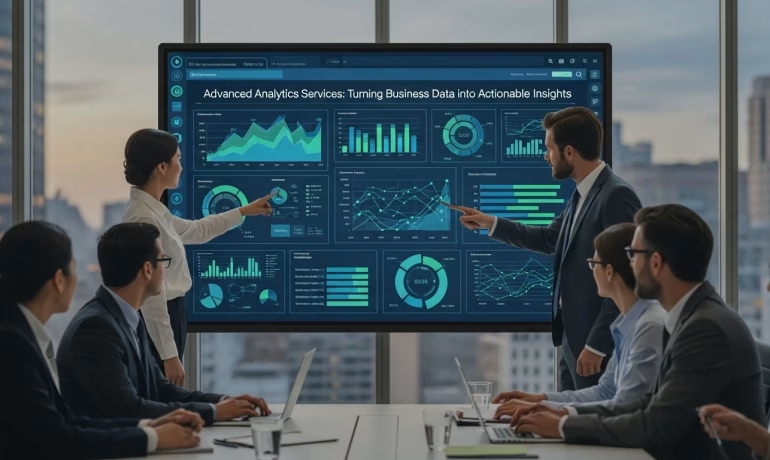
Advanced Analytics Services: Turning Business Data into Actionable Insights
Most businesses already have data. That’s rarely the problem.