

Most businesses don’t think much about storage. They think about files. They think about folders. They think about where things are saved. Storage itself stays invisible until it becomes a problem. At first, everything feels fine. Files open. Data is accessible. Backups exist somewhere. Nobody questions the setup because nothing is obviously broken.
The moment storage starts slowing things down, people suddenly notice how important it actually is. That’s usually when businesses begin looking for the best SSD storage server instead of just more space.
Storage problems usually show up as delays, not failures
Storage rarely crashes dramatically. It slows.
A file takes longer to open.
A backup takes longer than expected.
A system feels heavy for no clear reason.
People blame the internet.
They blame devices.
They restart things and move on.
But over time, those delays pile up. Productivity drops quietly. Work feels heavier than it should. That’s often when businesses realize storage performance not capacity is the real issue.
HDDs work until speed starts to matter
Traditional hard drives still exist for a reason. They’re cheaper. They store a lot of data. They work fine for archives. But they’re slow. As businesses deal with more data, that slowness becomes noticeable especially when files are accessed frequently.
This is where SSD-based storage changes everything and why many teams upgrade to the best SSD storage server for active business data.
SSDs don’t just store data, they change how work feels
The difference between HDD and SSD isn’t subtle. Files open instantly. Systems respond faster. Backups complete sooner. People don’t always realize what changed. They just feel that things are smoother.
An SSD storage server removes friction that teams assumed was normal.
Backups are one of the biggest reasons businesses switch
Backups sound boring until they matter. A system fails. Data is lost. Someone needs yesterday’s version. Slow backups are risky backups.
If backups take too long, they don’t run as often. If recovery takes too long, downtime increases. SSD storage servers make backups faster and more reliable. Recovery becomes practical instead of stressful.
Media-heavy businesses feel the difference immediately
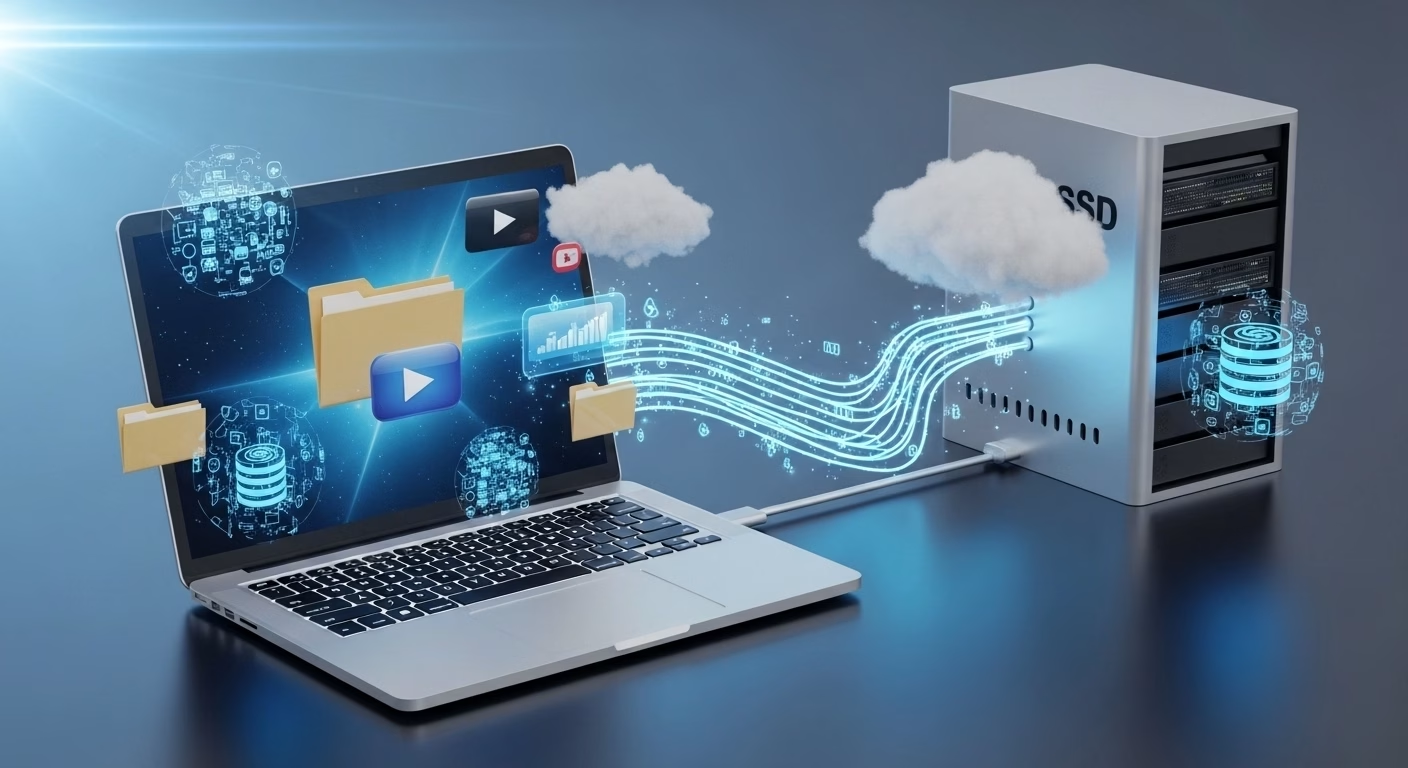
Some businesses deal with large files daily videos, images, design assets. These files punish slow storage. Editors wait. Designers lose focus. Transfers interrupt work.
For teams that can’t yet justify dedicated storage infrastructure, cheap VPS hosting in Lahore with SSD-backed disks often becomes the first step toward better performance.
Performance matters even when nothing looks broken
One mistake businesses make is waiting for storage to fail. They wait for errors. They wait for crashes. By then, productivity has already suffered.
Storage performance affects daily work even when systems are technically “working.” SSD servers improve performance long before failure becomes visible.
SSD storage supports modern applications better
Modern applications expect fast storage databases, analytics tools, internal platforms. When storage can’t keep up, applications feel unstable.
An SSD storage server provides the responsiveness modern software expects. This reduces issues that are often wrongly blamed on code or servers.
Reliability improves because there are fewer moving parts
Traditional drives rely on physical movement. That movement wears out over time. SSDs don’t have moving parts. That reduces mechanical failure.
While no storage is perfect, SSDs are generally more reliable under heavy workloads—especially for businesses that depend on constant data access.
Storage speed affects security too
Security isn’t just about protection. It’s about recovery. If systems are compromised, recovery speed matters. Slow storage slows recovery.
SSD-based backups allow faster restoration. Systems return online sooner. Damage is limited. That speed becomes part of real risk management.
Cloud SSD servers offer flexibility
Many businesses don’t want physical storage. They want flexibility. SSD cloud servers allow businesses to scale without hardware purchases.
Some start small using cheap VPS hosting in Lahore for backups or staging data, then move to dedicated SSD storage servers as workloads grow.
Cost is often misunderstood
SSD storage costs more than HDD storage. That’s true. But cost shouldn’t be measured only in hardware prices. Waiting costs money. Downtime costs money. Frustration costs money.
Over time, the productivity gains from the best SSD storage server usually outweigh the higher upfront cost.
Not all data needs SSD speed
It’s important to be realistic. Archives, old records, rarely accessed data these don’t always need SSD performance. Many businesses use a mix:
- SSDs for active workloads
- HDDs for long-term storage
Smart storage planning balances cost and performance.
Storage bottlenecks affect teams differently
Developers feel it through slow builds. Designers feel it through lag. Operations feel it through long backups. Everyone feels it eventually. SSD storage removes a shared source of friction across teams.
Local hosting reduces latency
Where storage lives matters. Distance adds delay. That’s why many businesses prefer locally hosted SSD solutions.
Using cheap VPS hosting in Lahore or local SSD servers reduces latency and improves consistency compared to overseas storage.
Scaling storage without planning causes problems
Adding storage isn’t just about space. Performance must scale too. If storage grows but speed doesn’t, systems slow down.
SSD servers handle scale better because performance remains consistent as workloads increase.
Monitoring storage matters more with SSDs
SSD storage is fast, but it still needs monitoring—capacity, usage patterns, wear levels.
The best SSD storage server setups include proper visibility to prevent surprises and maintain long-term performance.
Downtime feels worse when data is slow
When systems go down, teams want fast recovery. Slow storage turns recovery into long waits. SSD-based recovery shortens downtime and reduces frustration.
Why businesses in Pakistan are moving toward SSD storage
Businesses in Pakistan are handling more digital data than ever remote work, cloud systems, media production. SSD storage supports this shift.
The best SSD storage server solutions focus on speed, reliability, and local access.
Managed SSD storage reduces complexity
Managing storage isn’t a core business function. Drivers, updates, performance tuning all take time. Managed SSD services handle this complexity so teams can focus on their work.
Choosing the right SSD setup matters
Not all SSDs are equal. Configuration matters. Redundancy matters. Support matters. Choosing the right provider affects long-term stability.
Where ChromeiS fits
ChromeiS helps businesses deploy SSD storage solutions that fit real needs.
The focus stays practical:
- understanding data usage
- choosing the right mix of storage
- ensuring backups and recovery
- maintaining performance
Storage should support growth, not slow it down.
When storage works well, no one talks about it
That’s the sign of success. Files open quickly. Backups run quietly. Recovery works when needed. Storage disappears into the background.
Final thought
SSD storage servers aren’t about chasing speed for its own sake. They’re about removing delays that shouldn’t exist. When backups are fast, media loads instantly, and business data stays accessible, work feels lighter and teams stop fighting their own systems.
Similar Post
Secure Critical Business Data Using an SSD Storage Server
Most businesses don’t think about storage until something slows