
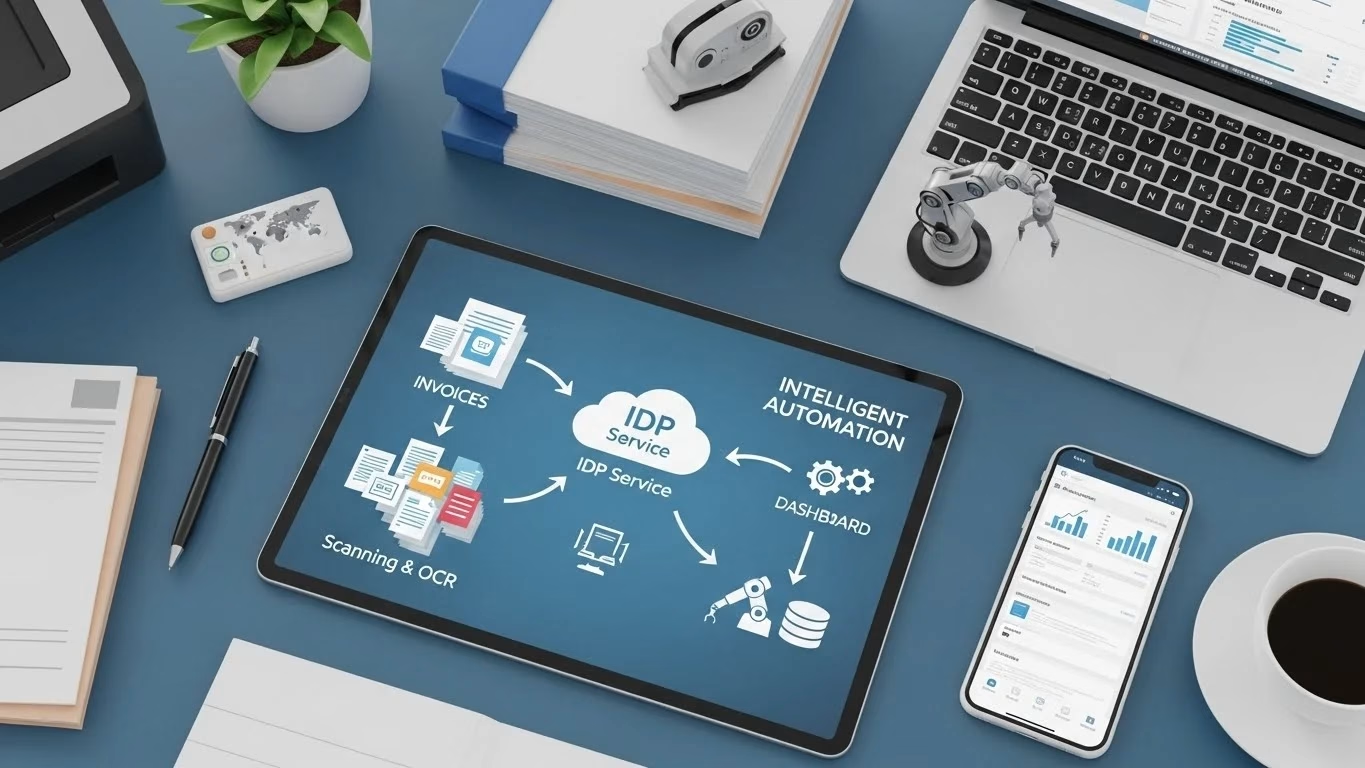
Documents don’t feel like a problem when a business is small. A few invoices come in. Some forms are emailed. Contracts are reviewed manually. Someone downloads files, reads them, enters data into another system, and moves on. It feels manageable.
The problem is that this way of working doesn’t break loudly. It breaks slowly. And by the time businesses notice, documents have already turned into a bottleneck. This is where intelligent document processing services in Pakistan become relevant not as a buzzword, but as a way out of quiet operational friction.
Why documents still control daily operations
For all the talk about automation and paperless systems, documents are still at the center of how businesses run. Invoices. Purchase orders. Bank statements. Contracts. Onboarding forms. Compliance records. Emails with attachments. Scanned PDFs. Images taken on phones.
They come from everywhere. And most of them don’t arrive in clean, structured formats. They arrive inconsistent, incomplete, and unpredictable. Businesses rely on documents because they carry information that matters. The issue isn’t their existence it’s how that information gets stuck inside them.
Manual handling doesn’t scale the way people expect
In many companies, document handling grows organically. One person processes invoices. Another checks contracts. Someone else verifies forms. As volume increases, teams add more people instead of changing the process.
At first, this works. Then accuracy drops. Turnaround time increases. Costs rise quietly.
Manual handling creates hidden problems:
- repeated data entry
- human error
- delayed approvals
- inconsistent records
- dependency on specific people
What started as “just admin work” becomes operational drag.
Traditional OCR solves only part of the problem
Many businesses tried to fix this with OCR. Basic OCR reads text. It converts images into words. That’s helpful but limited.
OCR doesn’t understand:
- what a number represents
- which field matters
- whether data is complete
- how documents differ from each other
As soon as formats change, OCR systems struggle. Teams end up reviewing and correcting outputs manually, which defeats the purpose. This is where frustration usually sets in.
What Intelligent Document Processing actually changes
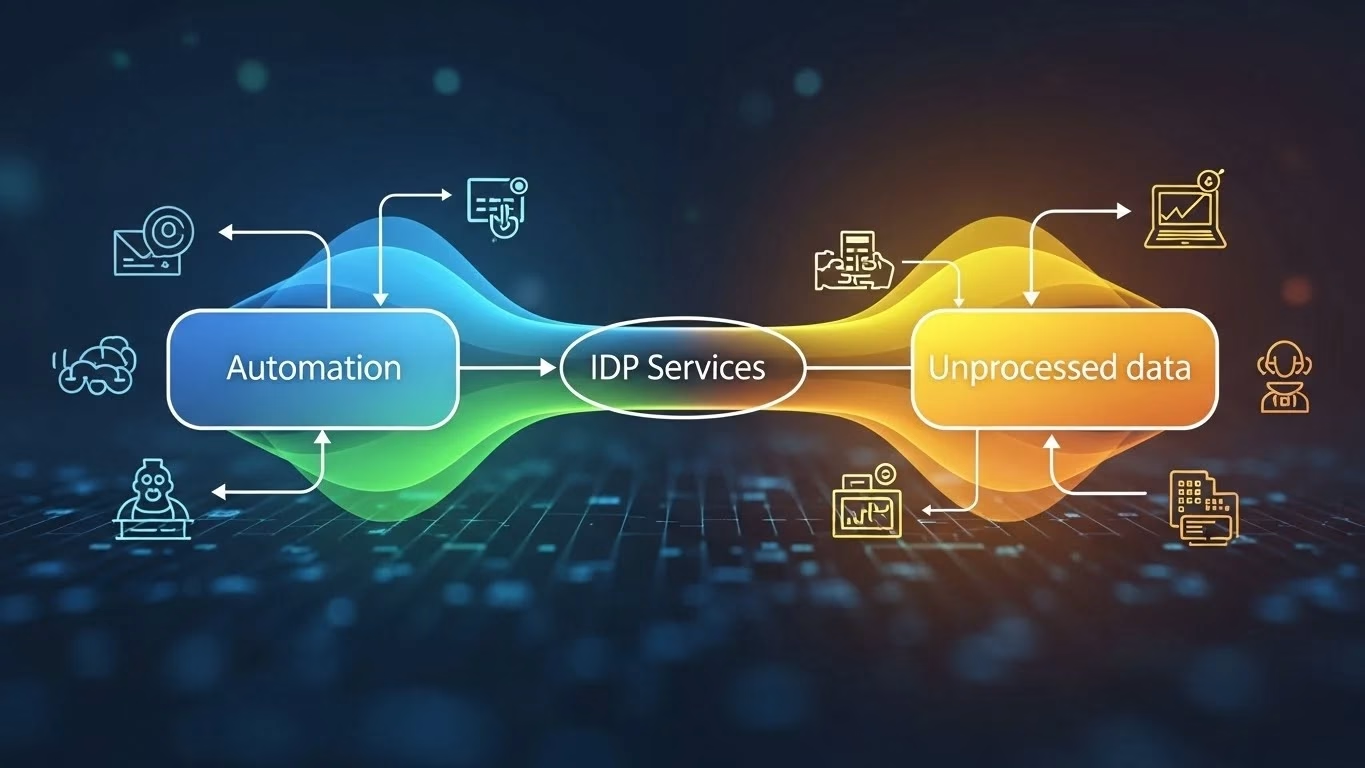
IDP doesn’t just read documents. It interprets them. Instead of relying on fixed templates, IDP systems learn patterns. They recognize context. They understand which information matters and where it belongs.
Over time, they improve. This allows businesses to process:
- invoices from multiple vendors
- forms with different layouts
- scanned documents of varying quality
- documents in mixed formats
Without rebuilding rules every time something changes.
IDP is about reliability, not speed alone
Speed is often mentioned first, but it’s not the real value. The real shift is consistency. IDP reduces dependency on human judgment for repetitive tasks. Data extraction becomes predictable. Errors decrease. Exceptions become visible instead of hidden.
When data becomes reliable, downstream systems benefit:
- ERPs receive cleaner inputs
- analytics become more accurate
- reporting reflects reality
This is where IDP starts feeding directly into advanced analytics solutions in Pakistan, enabling better insight instead of just faster processing.
How IDP fits into intelligent automation
Intelligent automation works best when systems communicate without human effort in between. IDP plays a key role here:
- documents arrive
- relevant data is extracted
- information is validated
- data flows into business systems
- humans review only what needs attention
Instead of people being stuck in the middle, they oversee the process. This is how automation becomes sustainable and scalable.
Why IDP matters more in Pakistan
In Pakistan, document-heavy workflows are still common. Many businesses deal with:
- scanned paperwork
- handwritten forms
- inconsistent document standards
- mixed languages
- manual approvals
As operations grow, these workflows slow everything else down. IDP helps businesses modernize without forcing unrealistic changes overnight. It works with imperfect inputs which is critical in real environments.
IDP is not plug-and-play
One mistake companies make is expecting instant perfection. IDP systems need:
- proper training
- realistic expectations
- feedback loops
- gradual refinement
Accuracy improves with use. The goal isn’t zero human involvement. It’s less human involvement where it adds no value. Successful implementations start small and expand naturally.
Common areas where IDP delivers real impact
IDP proves its value where volume and repetition meet risk:
- invoice processing
- expense validation
- onboarding and verification
- contract classification
- compliance documentation
In each case, the benefit isn’t just efficiency it’s control.
Where ChromeIS fits
ChromeIS approaches Intelligent Document Processing as part of a broader automation strategy, not a standalone tool. The focus stays grounded:
- understanding how documents actually flow
- identifying where friction exists
- integrating IDP with existing systems
- ensuring data ends up where it’s needed
This often includes seamless integration with cloud data services in Pakistan so extracted information moves smoothly into operational and analytical systems. Instead of replacing teams, IDP supports them by removing the work that slows them down.
Intelligent automation works best when no one notices it
The best automation doesn’t feel dramatic. Documents move. Data appears. Processes continue. People stop chasing files and start focusing on decisions. That’s when IDP is doing its job properly.
Final thought
Documents will remain part of business operations for a long time. What doesn’t need to remain is the manual effort wrapped around them.
Intelligent Document Processing allows businesses to turn documents from obstacles into inputs. And as automation becomes more common, IDP stops being optional it becomes foundational. Quiet foundations are usually the strongest ones.
Similar Post
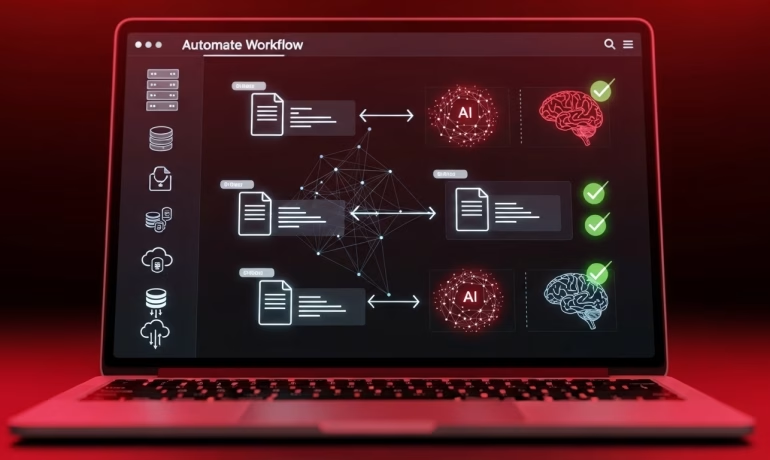
Automate Business Workflows with Intelligent Document Processing
Most businesses still run on documents. Invoices. Contracts. Purchase