
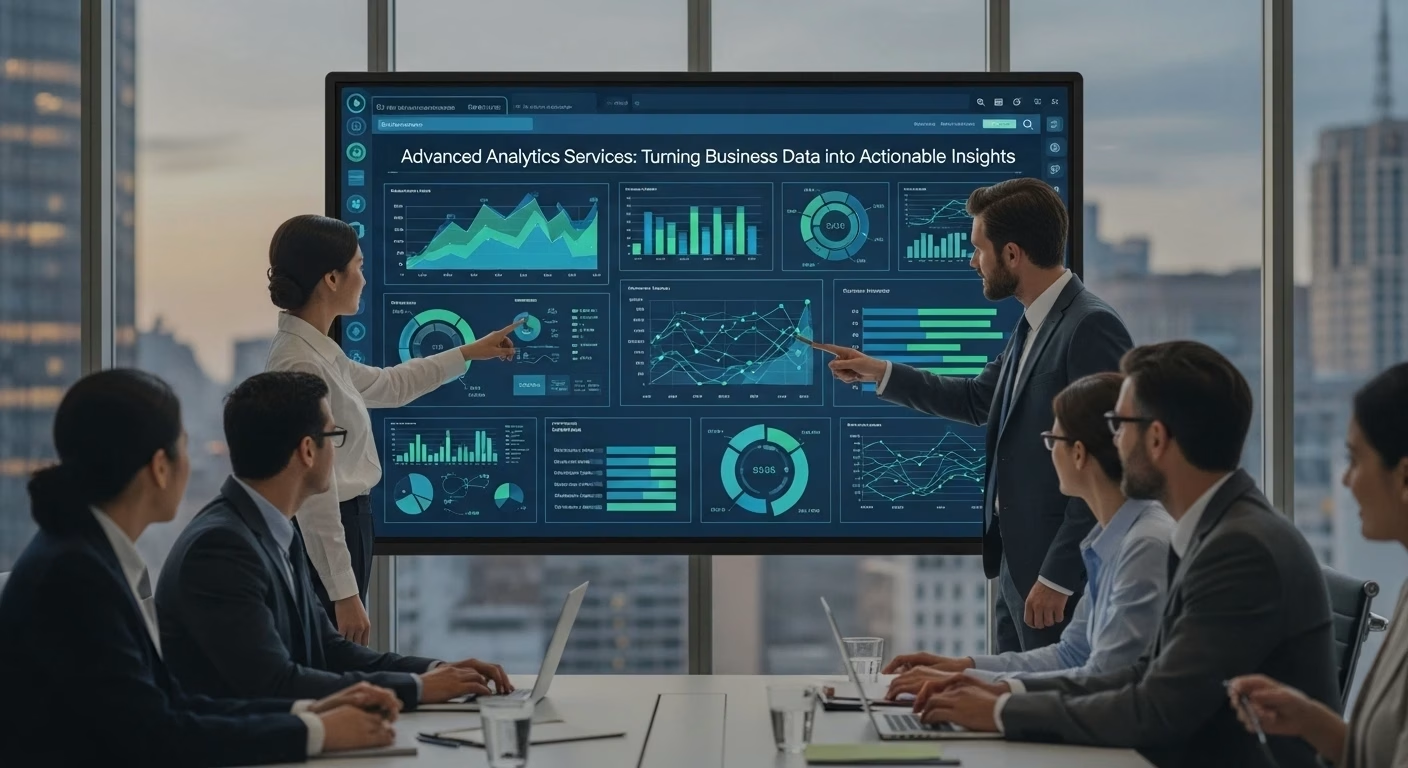
Most businesses already have data. That’s rarely the problem. They have numbers everywhere. Sales figures. Website visits. Customer records. Reports are sent every week. Dashboards that keep growing. And yet, decisions still feel hard. People still argue in meetings. Plans still change last minute. Outcomes still surprise everyone. That’s usually when someone says, “We have data, but we’re not really using it.”
This is where advanced analytics solutions Pakistan businesses are now turning to not to collect more data, but to bring clarity to what already exists.
Data doesn’t help just because it exists
This is where frustration starts. Businesses assume that collecting data will naturally lead to clarity. In practice, it often does the opposite. More numbers mean more questions. More dashboards mean more confusion.
Advanced analytics doesn’t add more data. It helps make sense of what’s already there. That shift from collection to interpretation is what separates reporting from real decision support.
Analytics becomes useful when it answers real questions
Basic analytics tells you what happened. Sales went up. Traffic went down. Costs changed.
Advanced analytics starts asking different questions. Why did this happen here but not there? What changed before the numbers moved? What’s likely to happen next if nothing changes?
These are the questions explored in depth in Advanced Analytics Is Essential for Competitive Business Growth because insight only matters when it leads to better decisions, not just better charts.
Machine learning is only helpful when it’s grounded
Machine learning sounds impressive. But on its own, it doesn’t solve problems. Machine Learning Analytics becomes useful when it’s applied to specific business questions—customer behavior, demand patterns, or operational efficiency.
It doesn’t replace thinking. It supports it when patterns become too complex to spot manually.
Trends matter more than snapshots
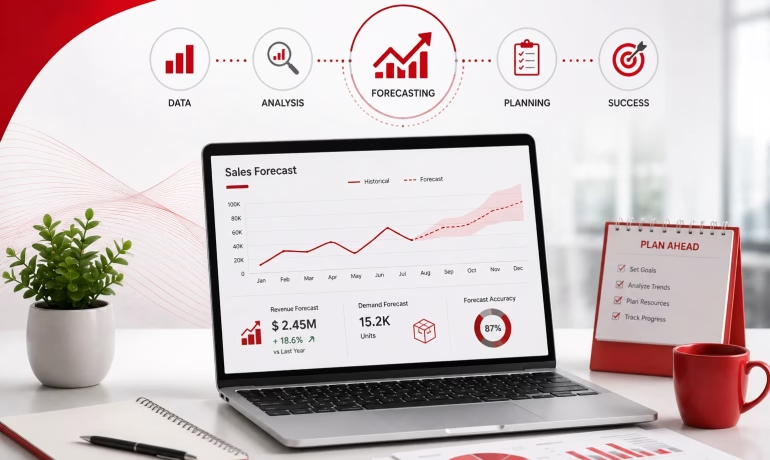
Most reports show a single moment in time. Advanced analytics focuses on movement. Trend analysis and forecasting help teams see direction instead of isolated results.
Is something improving slowly? Declining quietly? Is a sudden spike part of a bigger shift or just noise? Seeing trends early changes how teams respond.

Predictive analytics helps reduce guessing
Many business decisions involve uncertainty. Which campaign to invest in. Where to allocate budget. What to scale next.
Predictive analytics doesn’t remove risk, but it narrows it. Decisions feel steadier when they’re informed by patterns rather than assumptions one of the core strengths of practical advanced analytics solutions Pakistan companies rely on for smarter planning.
Insights fail when they’re too complex to use
One of the most common analytics problems is overcomplication. Models look impressive. Dashboards look advanced. But no one knows what action to take.
Analytics only works when insights are understandable. Clear language. Clear visuals. Clear connection to decisions. If insights don’t influence action, they’re just decoration.
Data quality shapes every result
Poor data leads to poor insight. Missing values. Inconsistent formats. Outdated records. Advanced analytics exposes these issues quickly.
Strong analytics services focus on fixing data foundations before chasing outcomes. Clean data isn’t exciting but it’s essential.
Analytics should support goals, not curiosity
Analytics without purpose drifts. Teams explore data because it’s available, not because it’s useful.
Effective advanced analytics starts with goals: reduce costs, improve retention, increase efficiency. Insights matter only when they help move something forward.
Timing matters more than precision sometimes
Some decisions can wait. Others can’t. Real-time analytics helps teams respond when timing matters campaign performance, system usage, customer activity.
In many cases, fast visibility matters more than perfect accuracy.
Analytics improves conversations inside teams
Meetings often stall due to opinion. Different assumptions. Different perspectives. Analytics introduces shared reference points.
Conversations shift from “I think” to “the data suggests.” That shift alone improves decision quality.
Adoption is more important than sophistication
The most advanced tools don’t help if no one uses them. Successful analytics services focus on adoption training, explanation, and integration into daily workflows.
Analytics should feel supportive, not intimidating.
Why advanced analytics matters more now
Competition is tighter. Margins are thinner. Small improvements make noticeable differences. Advanced analytics helps businesses make smarter adjustments instead of broad guesses one reason why Advanced Analytics Is Essential for Competitive Business Growth has become a recurring discussion point for leadership teams.
Analytics grows with the business
Analytics isn’t static. Data changes. Behavior changes. Priorities shift. Advanced analytics evolves alongside the business, adjusting insights and models as growth continues.
Where ChromeiS fits
ChromeiS approaches analytics with practicality.
The focus stays grounded:
- starting with real business questions
- organizing reliable data
- applying analytics where it adds value
- translating insight into action
This approach is reflected across its advanced analytics solutions Pakistan businesses use to move from scattered information to confident decision-making.
Analytics supports confidence, not certainty
Advanced analytics doesn’t predict the future perfectly. It reduces uncertainty. Decisions feel calmer. Planning feels more deliberate. That confidence matters.
Final thought
Most businesses don’t struggle because they lack data. They struggle because they lack clarity. Advanced Analytics Services help turn scattered information into insights teams can actually use.
When analytics works, decisions feel steadier, planning feels intentional, and growth becomes less reactive and more controlled.
Similar Post
Understanding the Role of Advanced Analytics in Business Success
Businesses generate information every day. Sales are recorded. Customers

Advanced Analytics: Turning Business Data into Better Decisions
Every business collects data. Sales reports. Customer inquiries. Website