

Most software doesn’t break in front of developers. It breaks later. It breaks when someone uses it differently. Faster. Slower. On a phone instead of a laptop. On bad internet. Late at night. Half paying attention. That’s the part most teams don’t see while building. Internally, everything feels fine. The feature works. The screen loads. The button does what it’s supposed to do. And yet, once real users arrive, problems start appearing. Not big ones. Small ones. The kind people don’t always report. That’s why independent teams offering software testing in Lahore play such an important role in catching what internal testing often misses.
Problems usually start quietly
Users don’t always complain. They just stop. They leave a form halfway. They don’t finish checkout. They don’t come back the next day. From the outside, it looks like normal behavior. From the inside, it’s a quality issue that was never noticed.
This is where software testing agencies matter. They exist to look at software the way users do without assumptions.
Internal teams test what they know
Developers usually test the paths they built. That’s natural. They know where to click. They know what inputs make sense. They know what should happen next. Users don’t have that knowledge. They click randomly. They skip steps. They type things no one expected.
Testing agencies approach the product without context. They don’t care what was intended. They care what actually happens. That difference alone exposes many issues.
Testing is not checking boxes
A lot of teams believe they test. In reality, they confirm.
They confirm the login works. They confirm the dashboard opens. They confirm the form submission.
Testing agencies go further. They try to submit incomplete data. They refresh at the wrong time. They use old browsers. They interrupt actions halfway. These are the moments where quality issues live.

Manual testing still catches real problems
Automation is useful. No question. But automation doesn’t feel confusion. It doesn’t notice when a message sounds wrong. It doesn’t pause when something feels unclear. It doesn’t get frustrated.
Humans do. Testing agencies still rely heavily on manual testing because people notice things scripts don’t. Automation supports testing. It doesn’t replace thinking.
Automation helps prevent repeated mistakes
Where automation helps the most is in repetition. When software updates again and again, old issues can quietly return. Automation testing companies build tests that run every time something changes. This keeps the core of the application stable.
Without automation, teams rely on memory. And memory fails.
Performance issues hide until real usage
Many apps feel fast during development. Few users. Clean data. No pressure. Once real traffic arrives, behavior changes. Pages slow down. Requests pile up. Systems hesitate. Testing agencies simulate load to see what happens before users experience it. Techniques like Performance Testing using HP LoadRunner help identify bottlenecks early, before performance issues turn into user frustration.
Different devices expose different problems
Something that works perfectly on one device can break on another. Buttons shift. Layouts break. Touch behaves differently. Testing agencies check across browsers, screens, and operating systems because users don’t all use the same setup.
Users don’t care why something doesn’t work. They only remember that it didn’t.
Security problems are quality problems
Quality isn’t only about appearance. If data feels unsafe, trust disappears. Testing agencies look for weak points. Not to scare teams, but to protect them. Security issues caught early are manageable. Caught late, they’re expensive.
Testing produces understanding, not just bug lists
Good testing doesn’t just report issues. It reveals patterns. Where users hesitate. Where flows confuse people. Where systems slow down. Testing agencies document these patterns so teams can improve design and development decisions over time.
Continuous testing fits how software is built now
Software doesn’t stop changing. Updates happen. Features evolve. Fixes roll out regularly. Testing agencies work alongside development cycles instead of waiting for the end. This reduces last-minute surprises and rushed releases.
Why testing agencies matter in Pakistan
Digital products in Pakistan are growing fast. Users compare experiences globally. Expectations are higher. Testing agencies in Pakistan help businesses match those expectations without burning out internal teams. Independent testing adds confidence before release.
Bad quality costs trust, not just time
Bugs don’t only waste development hours. They damage credibility. Users rarely give second chances to broken experiences. They just move on. Testing agencies help prevent those silent losses.
Quality improves when testing informs decisions
Testing isn’t about blaming developers. It’s about learning. Where users struggle. Where systems fail under pressure. Where improvements matter most. This insight helps teams build better products instead of guessing.
Where ChromeiS fits
ChromeiS treats testing as part of building, not something added later. The approach stays practical:
- real user scenarios
- manual and automation testing together
- performance and security checks
- clear feedback to development teams
Quality improves when testing and development work together.
Good testing is invisible to users
When testing is done well, nothing dramatic happens. No complaints. No confusion. No unexpected behavior. Software just works.
Final thought
Most applications don’t fail because of one big mistake. They fail because small issues stack up unnoticed. Software testing agencies ensure application quality by looking where others don’t, testing how users actually behave, and catching problems before users feel them.
When quality is handled properly, software doesn’t stand out. It simply feels dependable.
Similar Post
How Testing As A Service Supports Continuous Software Quality
Software quality is no longer something businesses can evaluate
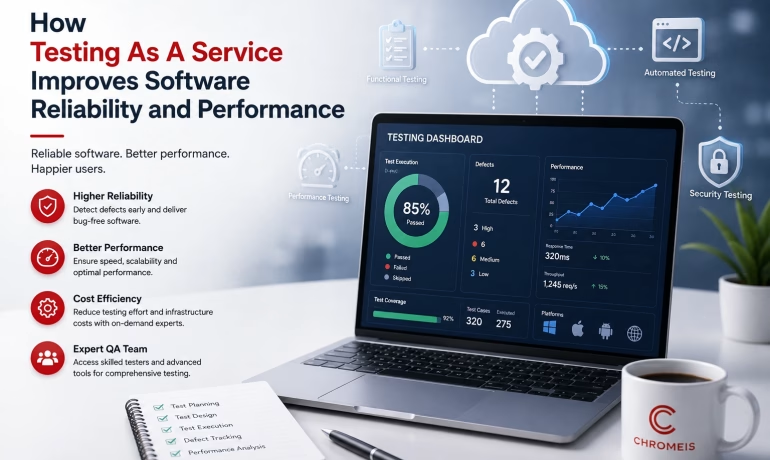
How Testing As A Service Improves Software Reliability and Performance
Software problems rarely appear at a convenient time. They