

I’ve seen a lot of businesses say they care about customer engagement. They run campaigns. They send emails. They post updates. From the inside, it looks busy. From the customer side, it often feels messy. Messages arrive that don’t match what the customer just did. Offers show up after interest is gone. Communication feels like it’s happening around the customer, not with them. That gap is where engagement usually breaks.
Engagement doesn’t fail all at once
It fades. People stop opening emails. They don’t unsubscribe. They just ignore it. That’s the dangerous part. Silence looks harmless in dashboards. But silence usually means the relationship is already slipping. Salesforce Marketing Cloud doesn’t magically fix that, but it changes how communication is shaped in the first place especially when it’s connected properly with customer service Salesforce systems instead of operating in isolation.
Most marketing feels like guessing
A lot of marketing decisions are educated guesses.
“We think this will work.”
“Let’s try this message.”
“Send it to everyone.”
Sometimes it works. Often it doesn’t. The problem isn’t effort. It’s context. Salesforce Marketing Cloud brings context into the picture. What the customer did last. What they ignored. Where they paused. That context changes how messages feel when they arrive.
Customers experience brands in moments, not campaigns
Inside companies, everything is planned in campaigns. Launch campaigns. Seasonal campaigns. Discount campaigns. Customers don’t experience any of that. They experience moments. Signing up. Clicking around. Leaving without finishing. Coming back days later.
Salesforce Marketing Cloud is built around these moments. It reacts to behavior instead of sticking to rigid schedules. That alone makes communication feel less forced—and avoids many of the problems highlighted in Salesforce Implementations Fail More Often Than They Succeed when platforms are used without clear strategy.
Relevance matters more than volume ever will
I’ve seen brands send fewer messages and get better engagement. Not because they became quieter, but because they became more selective. Salesforce Marketing Cloud helps decide when not to send something. That’s harder than sending more. Customers don’t need constant reminders. They need timing that makes sense.
Email still works when it feels connected
Email isn’t dead. Bad email is. When emails arrive without context, they feel like spam even if the brand is trusted. Marketing Cloud connects email to actions. Browsing. Purchasing. Ignoring. Returning.
That connection changes tone. Emails feel less like announcements and more like responses. People can tell when a message knows where they are in the journey.
Personalization is usually misunderstood
Using someone’s name isn’t personalization. Real personalization is knowing what not to repeat. Salesforce Marketing Cloud uses behavior to shape content. That means customers don’t get pushed down paths they already completed.
This reduces frustration more than it increases excitement—and that’s important. Less frustration keeps people around.
Automation doesn’t have to feel robotic
Automation gets blamed a lot. Usually because it’s used poorly. When automation just pushes messages faster, it annoys people. When it prevents mistakes and overlaps, it helps quietly.
Salesforce Marketing Cloud automation helps avoid duplicate messages, conflicting communication, and badly timed follow-ups. Customers don’t notice automation when it’s done well. They notice chaos when it isn’t.
Engagement doesn’t live in one channel
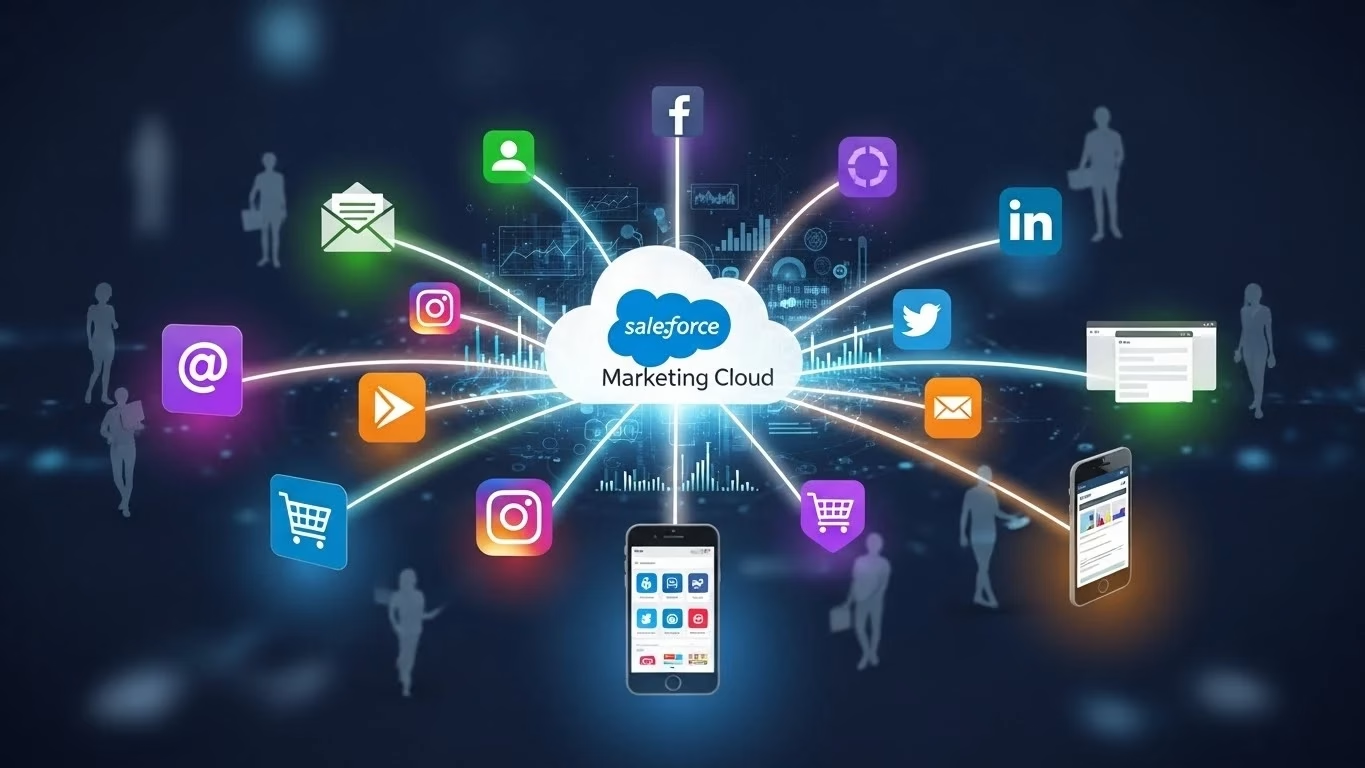
Customers move. Email today. Website tomorrow. Mobile later. Salesforce Marketing Cloud supports multiple channels, but the value isn’t using everything. It’s choosing what fits how the customer behaves.
Some people never respond to emails. Some do. Treating them the same breaks engagement.
Timing changes meaning
The same message can feel helpful or annoying depending on timing. Salesforce Marketing Cloud responds to triggers. Actions. Pauses. Returns. Messages arrive when they feel logical, not when someone scheduled them weeks earlier. That difference is subtle, but it changes how brands are perceived.
Metrics don’t tell the whole story, but they help
Clicks and opens matter, but they don’t explain intent. Salesforce Marketing Cloud tracks movement. Where people drop off. Where they return. Where journeys slow down. That view helps teams stop repeating what isn’t working.
Disconnected teams create disconnected experiences
Customers notice when marketing, sales, and support don’t align. They feel it when promises don’t match reality. Salesforce Marketing Cloud works best when connected with CRM and customer service Salesforce systems. That alignment reduces contradictions customers pick up on quickly.
Why this matters more now
Customers in Pakistan are more aware than before. They use global platforms daily. Their expectations come from experiences that feel smooth and coordinated.
Fragmented communication feels outdated quickly. Salesforce solutions in Pakistan help businesses move toward structured engagement instead of relying on manual effort and guesswork.
Tools don’t replace thinking
Salesforce Marketing Cloud isn’t an automatic success. It needs planning. Understanding journeys. Defining logic. When businesses rush setup, engagement stays shallow. When they slow down and think, it improves steadily—avoiding the common pitfalls described in Salesforce implementations that fail due to poor alignment and planning.
Engagement improves when listening replaces pushing
Salesforce Marketing Cloud makes listening easier. Not listening to words, but to behavior. What customers ignore. What they repeat. What brings them back.
That kind of listening reshapes communication naturally.
Where ChromeIS fits
ChromeIS approaches Salesforce Marketing Cloud with restraint. Not every feature. Not maximum automation.
The focus stays on:
- journeys that reflect real behavior
- automation that prevents mistakes
- integrations that keep teams aligned
- reporting that informs change
Engagement works better when systems support understanding instead of noise.
Engagement isn’t a switch
It doesn’t change overnight. It improves as communication becomes calmer, more relevant, and more consistent. Salesforce Marketing Cloud supports that shift by connecting moments instead of treating interactions as isolated events.
Final thought
Customer engagement doesn’t improve by talking more. It improves when communication starts making sense. Salesforce Marketing Cloud helps brands move from guessing to responding. When engagement feels natural instead of forced, customers stay without needing to be convinced.
Similar Post

Enhancing CRM Efficiency Through Salesforce Solutions
Customer relationships don’t stay simple for long. At the

Improve Customer Relationships Using Advanced Salesforce Solutions
Customer relationships rarely break all at once. They weaken